For woodworkers who demand unparalleled accuracy and splinter-free results, the plunge cut circular saw has become an indispensable tool. Far more than just a standard circular saw, these specialized machines offer a level of precision and control that can transform your projects, from cabinetry to custom furniture. If you’ve ever wrestled with large sheet goods on a table saw or struggled to achieve perfectly straight, clean cuts with a handheld saw, a plunge cut circular saw — often paired with a guide rail system — provides an elegant and efficient solution. This guide will delve into what makes these saws essential, explore their key features, review top models, and help you select the ideal tool to elevate your woodworking craftsmanship.
Understanding Plunge Cut Circular Saws
A plunge cut circular saw, frequently referred to as a track saw when used with its accompanying guide rail, is an advanced type of circular saw distinguished by its blade mechanism. Unlike conventional circular saws where the blade is exposed from the bottom, a plunge saw’s blade is typically housed within a spring-mounted guard. This design allows the operator to “plunge” the blade down into the workpiece at a precise, controlled depth after the saw is positioned. This unique action, combined with the guide rail, offers significant advantages over other cutting tools.
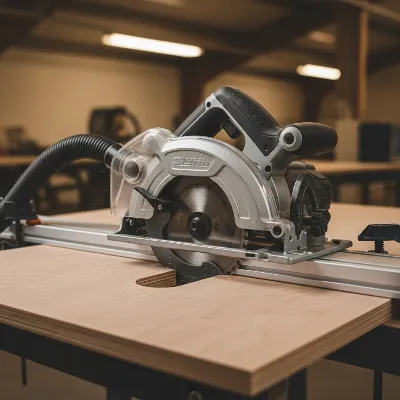 A close-up of a plunge cut circular saw making a precise, splinter-free cut on a sheet of plywood, guided by a track.
The history of the plunge saw is closely tied to the demand for greater accuracy in woodworking, with companies like Festool pioneering their development in the 1980s. What started as a specialist tool has evolved into a mainstream solution for precision cutting, thanks to technological advancements and wider availability.
Compared to traditional circular saws, plunge cut models offer superior control and cut quality, particularly for long, straight lines and cutting into the middle of a panel. While table saws excel at repetitive ripping of smaller pieces, a plunge saw system provides exceptional portability and safety for handling large sheet goods, which can be cumbersome and hazardous on a stationary table saw. Their enclosed blade guards also contribute to highly efficient dust extraction, creating a cleaner and safer working environment, especially when processing materials like MDF.
In summary, the primary benefits of plunge cut circular saws include:
- Exceptional Cut Quality: Achieves remarkably clean, splinter-free, and accurate cuts.
- Versatile Cutting Capacity: Ideal for safely and precisely trimming large boards and sheet goods.
- Portability: The saw and guide rail system are easy to transport and store, making them perfect for job sites or workshops with limited space.
- Superior Dust Extraction: The enclosed blade guard design facilitates very efficient dust removal, improving visibility and air quality.
Key Features to Look for in a Plunge Cut Circular Saw
Selecting the right plunge cut circular saw involves understanding the various features that contribute to its performance, safety, and ease of use. A careful evaluation of these aspects will ensure your chosen saw aligns perfectly with your woodworking demands.
First, power and motor rating are crucial. Most plunge saws for woodworking range from 10 to 12 amps for corded models, with higher amperages offering increased efficiency and speed, often exceeding 5,500 RPM under load, which is vital for denser materials. For cordless options, brushless motors are highly valued for their superior torque, extended battery life, and reduced maintenance. Variable speed control, typically ranging from 2,000 to 6,300 RPM, is another key feature, allowing you to optimize performance for different materials, from softwoods to aluminum or acrylic glass.
Cutting depth capacity is another essential specification. While most models offer depths between 1-1/8 inches and 2-3/16 inches at 90 degrees, it’s important to note that bevel cuts will reduce this capacity, often to about 1-5/8 inches at a 45-degree angle. An adjustable depth gauge provides precise control, preventing overcuts and enhancing accuracy.
Consider blade compatibility options, as this directly impacts cut quality. Most plunge saws utilize 6-1/2 or 7-1/4 inch blades, with standard arbor sizes like 20mm or 5/8 inches. Fine-tooth, carbide-tipped blades are recommended for smooth, splinter-free finishes and extended longevity, especially when working with hardwoods or laminates.
Bevel angle adjustment capabilities significantly enhance versatility. Many saws offer a range from -1° to 48°, often with positive stops at common angles like 22.5° and 45°, facilitating quick and accurate adjustments for complex joinery and intricate designs.
Ergonomic design factors contribute to comfort and control, especially during extended use. Look for features such as a rubberized, ergonomic handle, lightweight construction for maneuverability (models can range from 4.5 to 12.5 pounds), a large top handle, and effective vibration control technology.
Effective dust management systems are paramount for a clean and healthy workspace. Saws with back-mounted dust ports and vacuum attachments, often enhanced by enclosed guards and anti-kickback features, can achieve up to 90% dust extraction efficiency. Some systems integrate directly with specific dust collectors, though checking for compatibility with standard shop vacuums is advisable.
Additional safety and convenience features include a soft start mechanism, which prevents the saw from jolting and potentially shifting the guide rail upon startup. An electric brake rapidly stops the blade once the trigger is released, adding an extra layer of safety. For ripping natural woods, a riving knife helps prevent kickback by keeping the cut sides from closing around the blade. Some systems also incorporate an anti-kickback device to prevent the saw from moving backward on its track, enhancing stability and safety. Finally, a scoring facility, found on models like the Makita SP6000, makes a shallow initial cut to prevent chipping on delicate materials like laminates before the main pass.
Top Brands and Models of Plunge Cut Circular Saws
The market for plunge cut circular saws features several reputable brands, each offering tools with unique strengths designed to cater to various woodworking needs and budgets. From premium professional-grade options to reliable choices for hobbyists, understanding the key players and their standout models is essential.
Brands like Festool are often considered the gold standard, renowned for their exceptional precision, advanced features, and integrated system approach with guide rails and dust extraction. Their tools, while at a higher price point, deliver unparalleled cut quality and durability.
Makita is another dominant force, offering a wide range of plunge saws known for their powerful motors, ergonomic designs, and versatility. Models like the Makita SP6000J are celebrated for their precision and splinter-free finish, making them a favorite among professionals for cabinetry and finish carpentry. Makita also provides robust cordless options, such as the 18-Volt X2 LXT Brushless Plunge Circular Saw Kit, which combines portability with impressive cutting performance.
DeWalt plunge saws, especially their 60V MAX* series, are favored for their raw power and robust construction, often equipped with brushless motors capable of cutting through tough hardwoods with ease. Their Zero Clearance TrackSaw™ system and continuous anti-kickback mechanism emphasize both precision and safety.
Bosch offers professional-grade plunge saws like the GKT 55 GCE, known for their variable speed control and Constant Electronic system, allowing them to cut a variety of materials beyond just wood.
For woodworkers seeking reliable performance without the premium price tag, brands like WEN provide excellent value. The WEN CT1065, for instance, offers a powerful motor, adjustable depth, and a compact design, making it a strong contender for woodworking enthusiasts and DIYers who require precision and portability.
 A display of various plunge cut circular saws from top brands like Festool, Makita, and DeWalt, showcasing their distinct designs and features.
Comparative Table: Top Plunge Cut Circular Saws
To help you make an informed decision, here’s a detailed comparison of some of the best plunge cut circular saws available, highlighting their key specifications and features.
| Model | Power / Motor | Blade Size | Max Cut Depth (90°/45°) | Variable Speed (RPM) | Key Features | Pros | Cons |
|---|---|---|---|---|---|---|---|
| WEN CT1065 | 10-Amp | 6.5-inch | 2-1/3″ / Not specified | Not specified | Adjustable depth gauge, non-slip base, compact design | Portable, powerful for DIY, good value | Suboptimal dust collection, track sold separately |
| Makita SP6000J | 12.0-Amp | 6.5-inch | 2-3/16″ / 1-9/16″ | 2,000-5,200 | Splinter-free finish, depth stop, ergonomic top handle, scoring facility | Precise, powerful, excellent finish quality, scoring for laminates | Limited cut capacity for very thick materials, 9.7 lbs can be heavy |
| Makita 18V X2 LXT (XPS01PTJ) | 36V Brushless (2x18V) | 6.5-inch | 2-3/16″ / -1° to 48° | 6,300 | Cordless, quick-charging batteries, electronic brake, Star Protection | Highly portable, powerful brushless motor, versatile bevel range | Heavy (27.4 lbs), guide rail sold separately, higher price point |
| *DEWALT 60V MAX (DCS520B)** | 60V Brushless | 6.5-inch | 2-1/8″ / Not specified | Not specified | Zero clearance TrackSaw™, anti-kickback, enclosed guard | Powerful for hardwoods, excellent safety features, precise cuts | Battery sold separately, higher price, specific blade size |
| Festool TS 55 FEQ-F-Plus-FS | 1200-watt | 6.5-inch | 2-1/4″ / 1-49/64″ | Not specified | Virtually splinter-free, -1° to 47° angles, integrated system | Unmatched cut quality, highly versatile angle adjustments | Very high price, requires Festool dust collector for optimal performance |
| VEVOR Cordless Track Saw | 72A Brushless | 5.5-inch | 2.05″ / 0° to 45° | 5,500 | Cordless, aluminum guard, 6 speed settings, Makita battery compatible | Powerful brushless, adjustable angles, good for detailed projects | Battery not included, mixed customer reviews, heavier (15.5 lbs) |
Note: “Not specified” indicates the RPM or 45-degree cut depth was not explicitly detailed in the browsed sources for these models within the context of the comparison, but may exist on manufacturer specifications.
How to Choose the Right Plunge Cut Circular Saw
Selecting the ideal plunge cut circular saw requires a careful assessment of your specific woodworking needs, budget, and desired features. This buying guide will walk you through the critical factors to consider.
Assess Your Woodworking Needs
Table is empty.First, clearly define your typical projects. Are you a weekend DIY enthusiast tackling home improvements, or a professional cabinet maker working with high-value materials daily? For occasional, less demanding tasks, a more budget-friendly saw like the WEN CT1065 might suffice, offering good precision without breaking the bank. Professionals, however, will benefit from the robust power, advanced features, and exceptional precision of tools like the Makita SP6000J or Festool TS 55, which stand up to rigorous use and deliver consistent, high-quality results on various materials. Consider the types of materials you cut most often—softwoods, hardwoods, laminates, or even plastics and aluminum—as this will influence the required motor power, blade compatibility, and variable speed settings.
Budget Considerations
Plunge cut circular saws vary significantly in price, ranging from approximately $50 for entry-level models to over $1,000 for top-tier professional systems. While it’s tempting to opt for the cheapest option, remember that a higher price often correlates with superior build quality, more advanced features, greater accuracy, and longer durability. Factor in not just the initial purchase price, but also the potential cost of essential accessories like guide rails, clamps, and specialized blades, especially if they are proprietary to a specific brand.
Corded vs. Cordless: Pros and Cons
The choice between a corded and cordless plunge saw hinges on your priority for power versus portability.
- Corded Plunge Saws: Generally offer consistent, high power, making them suitable for prolonged use and cutting dense materials without battery limitations. They are often lighter as they don’t carry a heavy battery pack. However, the cord can restrict movement and requires a nearby power source.
- Cordless Plunge Saws: Provide unmatched mobility and flexibility, ideal for job sites or areas without readily available power outlets. Advances in battery technology, such as Makita’s 18V X2 LXT or DeWalt’s 60V MAX*, deliver impressive power and runtime. The main downsides include the added weight of the battery, potential for power fade during demanding cuts, and the need for spare batteries and charging time. If you already own tools from a specific battery platform, investing in a compatible cordless plunge saw can be a cost-effective choice.
Essential Accessories
To maximize the potential of your plunge cut saw, certain accessories are indispensable.
- Guide Rails (Tracks): Absolutely critical for achieving long, perfectly straight, and splinter-free cuts. Ensure the rail is compatible with your saw; while some cross-compatibility exists, sticking to the manufacturer’s recommended system is usually best.
- Clamps: Used to secure guide rails to your workpiece, providing added stability and preventing movement during cuts.
- Dust Extractors/Vacuum Systems: Essential for maintaining a clean workspace and protecting your health, especially when cutting materials like MDF. Look for saws with efficient dust ports and consider investing in a dedicated dust extractor for optimal performance.
- Blades: A variety of blades with different tooth counts and geometries are available for specific materials (e.g., fine-tooth for plywood, negative hook angle for laminates). High-quality carbide-tipped blades offer better performance and longevity.
Safe and Effective Use of Your Plunge Cut Saw
Using a plunge cut circular saw, while offering superior precision and control, still requires adherence to strict safety protocols and proper operating techniques. Your safety and the quality of your work depend on it.
Safety Precautions
Always begin by wearing appropriate personal protective equipment (PPE), including safety glasses, hearing protection, and a dust mask, especially when cutting materials like MDF which produce fine dust. Before making any cut, ensure your workpiece is securely clamped to prevent movement and potential kickback. Never freehand a plunge cut saw; always use it with its dedicated guide rail system for maximum stability and accuracy. Keep hands clear of the blade path and maintain a firm grip on the saw’s handles.
Guide Rail Setup and Usage Tips
Setting up your guide rail correctly is key to achieving precise results. Clean both the underside of the rail and the workpiece surface to ensure a secure, slip-free connection. Many guide rails have an anti-splinter strip that should be trimmed on the first pass to exactly match the blade’s kerf, creating a perfect edge reference for subsequent cuts. For longer cuts, multiple guide rails can be connected using special connectors. Always ensure the guide rail is perfectly aligned with your cut line and clamped down, particularly for critical cuts or materials prone to shifting.
Blade Changing and Maintenance
Regular maintenance is crucial for the longevity and performance of your plunge saw. When changing blades, always unplug the saw (or remove the battery) to prevent accidental startup. Use the provided wrench or spindle lock mechanism to secure the blade. Ensure the new blade is installed with the teeth pointing in the correct direction as indicated by the saw’s rotation arrow. After each use, clean saw dust and debris from the motor vents, blade guard, and depth adjustment mechanisms. Lubricate moving parts as per the manufacturer’s instructions. Storing your saw and guide rails properly in their cases or on a rack will protect them from damage and dust.
Dust Extraction Best Practices
Effective dust management is one of the significant advantages of plunge saws. Always connect your saw’s dust port to a shop vacuum or dedicated dust extractor. The enclosed blade guard design helps funnel dust efficiently, but a powerful extraction system will maximize this benefit, keeping your workspace clean and improving cut line visibility. For optimal results, ensure the vacuum hose is securely attached and has sufficient airflow.
Real-World Applications for Woodworkers
The precision and versatility of plunge cut circular saws make them invaluable tools for a wide array of woodworking projects, enhancing accuracy and efficiency for both DIY enthusiasts and professional craftsmen.
One of their most common and essential applications is cutting sheet goods such as plywood, MDF, particleboard, and melamine. Accurately ripping down a full 4×8 foot sheet on a table saw can be challenging and dangerous, especially when working alone. A plunge saw on a guide rail allows you to make perfectly straight, splinter-free cuts directly on the floor or a stable workbench, transforming large panels into manageable, perfectly sized pieces for cabinetry, shelving, or furniture components.
Plunge saws are also excellent for trimming doors and panels. Whether you need to shorten a solid wood door or trim a pre-finished panel for a built-in, the guide rail ensures a perfectly straight and clean edge, often eliminating the need for further sanding. The scoring function available on some models, like the Makita SP6000, is particularly beneficial for cutting veneered or laminated panels, preventing tear-out and chipping.
For joinery, plunge saws can be used to make precise dados and grooves. By setting the plunge depth accurately and making multiple passes with an appropriate blade, you can create clean, uniform dados for shelves or cabinet backs, ensuring tight-fitting joints that enhance the strength and appearance of your projects.
Beyond these core uses, the plunge cut saw’s ability to “plunge” into the middle of a panel makes it suitable for cutting out sink or cooktop openings in countertops, creating internal cutouts in furniture components, or even intricate designs. Its portability also makes it a favorite for on-site construction tasks where precision sizing of materials is required.
Conclusion
The plunge cut circular saw stands as a testament to precision and efficiency in modern woodworking. Its unique plunging action, combined with the unwavering stability of a guide rail system, empowers woodworkers to achieve exceptionally clean, accurate, and splinter-free cuts that are often challenging with conventional tools. From transforming unwieldy sheet goods into perfectly sized panels for cabinetry to crafting intricate joinery, these saws offer a level of control that elevates project quality.
Investing in the right plunge saw means considering your specific needs, evaluating critical features like motor power, cutting depth, and crucial safety mechanisms, and understanding the benefits of both corded and cordless options. While models from Festool and Makita lead the professional segment with their advanced capabilities, reliable options from brands like WEN and DeWalt provide excellent value and performance for various users. Whichever model you choose, mastering its safe and effective use will unlock a new realm of possibilities in your workshop.
What precision projects are you eager to tackle with a new plunge cut circular saw?
Frequently Asked Questions
What safety features should I prioritize in a plunge cut circular saw?
Prioritize features such as an electric brake for rapid blade stop, a riving knife to prevent kickback when ripping, and an anti-kickback mechanism to maintain saw position on the track. Always ensure the saw has a robust blade guard and use appropriate personal protective equipment.
How does a plunge saw differ from a standard circular saw?
A plunge saw features a spring-loaded blade that retracts into a housing, allowing the user to “plunge” it into the material at a controlled depth. This design, especially when used with a guide rail, offers superior precision, cleaner cuts, and better dust extraction compared to a standard Circular Saw, which typically has an exposed blade that pivots from the front.
Can plunge saws effectively cut materials other than wood?
Yes, many plunge saws come with variable speed settings and are compatible with different blade types, enabling them to cut a variety of materials beyond wood. With the correct blade and speed, they can accurately cut laminates, engineered wood, acrylics, and even some non-ferrous metals like aluminum.
Are guide rails universally compatible across different plunge saw brands?
While there is some degree of cross-compatibility between certain brands’ guide rails and plunge saws, it’s not universal. To ensure optimal performance, accuracy, and safety, it is generally recommended to use guide rails specifically designed or explicitly stated to be compatible with your plunge saw by the manufacturer.
What maintenance is essential for extending the life of my plunge cut circular saw?
Regular maintenance for a plunge saw includes cleaning the blade and saw’s internal components after each use, ensuring motor vents are clear of debris, lubricating moving parts as recommended by the manufacturer, and properly storing the saw and its guide rails to prevent damage and dust accumulation. Always disconnect power before any maintenance.