Few things are as frustrating for a DIY enthusiast or professional as a circular saw blade suddenly seizing mid-cut. That abrupt halt, often accompanied by a jarring kickback, can be startling, disrupt your workflow, and even pose a safety risk. A stuck circular saw blade isn’t just an inconvenience; it’s a signal that something is amiss, demanding immediate and careful attention. Understanding the root causes and knowing the correct steps to safely free your blade can save you time, prevent damage to your tool and workpiece, and most importantly, keep you safe. This comprehensive guide will walk you through diagnosing why your blade is stuck, the essential safety precautions, a step-by-step unjamming process, and crucial tips to prevent future incidents, ensuring your projects continue smoothly and safely.
Understanding Why Your Circular Saw Blade Gets Stuck
A circular saw blade can bind or stop for several common reasons, often related to the material, the blade itself, or your cutting technique. Recognizing these causes is the first step toward a quick and effective solution.
Blade Pinching or Binding
This is arguably the most common culprit. As you cut, the material can sometimes close in on the blade, pinching it tightly within the kerf (the slot made by the cut). This often happens when: For shop curated circular saw on this site.
- Improper Workpiece Support: The wood sags or shifts as it’s being cut, causing the two halves of the workpiece to press against the blade.
- Twisting the Saw: If you deviate from a perfectly straight line or twist the saw even slightly during a cut, the blade can get wedged in the kerf.
- Internal Wood Stress: Some wood, especially fresh or knotty lumber, can have internal stresses that cause it to pinch the blade as it’s cut.
Dull, Damaged, or Incorrect Blades
Your blade’s condition and type play a significant role in cutting performance.
- Dull or Dirty Blade: A dull blade requires more force to cut, increasing friction and heat, which can cause it to bind or burn the wood. Accumulation of pitch and resin can also make the blade “sticky.”
- Warped or Damaged Blade: A blade that is bent or has missing/chipped teeth will not cut efficiently and is highly prone to binding and kickback.
- Incorrect Blade Type: Using a blade with the wrong tooth count or grind for the material (e.g., a low-tooth ripping blade for fine crosscuts or sheet goods) can lead to inefficient chip removal, excessive friction, and jamming.
Improper Blade Depth Setting
|
Our Picks for the Best Circular Saw in 2026
As an Amazon Associate I earn from qualifying purchases.
|
||
| Num | Product | Action |
|---|---|---|
| 1 | Cordless Circular Saw 6-1/2" for Makita 18V Battery (Not Inclued), 4500RPM Power Circular Saws w/Laser Guide, 0-45° Bevel Capability, Max 2-3/16" Depth, Electric Saw for Wood Plastic |

|
| 2 | Makita 5477NB 7-1/4" Hypoid Saw |
|
| 3 | Ryobi 14 Amp 7-1/4" Adjustable Electric Circular Saw w/Exactline Laser | CSB135L |
|
| 4 | Makita 5377MG 7-1/4" Magnesium Hypoid Saw |
|
| 5 | RYOBI Circular Saw CSB125 13-Amp 7-1/4 in. Electric (Renewed) |
|
| 6 | Seesii Mini Circular Saw with Laser Guide,4.8A 4000 RPM Compact Corded Circular Saw with Rip Guide,3 Blades (4-1/2") for Wood,Soft Metal,Tile,Plastic Cutting,Max Cut Depth 1-11/16"(90°),1-1/8" (45°) |
|
| 7 | Ridgid ZRR32104 THRUCOOL 7-1/4 in. Worm Drive Saw (Renewed) |
|
| 8 | Mini Circular Saw, 4Amp 3500RPM Corded Compact Saw with 4-1/2" 24T TCT Blades, Laser Guide, Rip Guide, Vacuum Adapter and Blade Wrench, Max Cutting Depth 1-11/16"(90°), 1-1/8"(45°) |
|
| 9 | RIDGID 18V Cordless 6 1/2 in. Circular Saw (Tool Only) |
|
| 10 | RIDGID 18V SUBCOMPACT BRUSHLESS Cordless 6-1/2 in. Circular Saw Tool ONLY R8656B |
|
Setting the blade depth incorrectly can contribute to binding. If too much of the blade extends below the workpiece, more teeth are engaged than necessary. This increases friction and the likelihood of the blade getting caught or pinched in the material. Generally, the blade should extend only about 1/8 to 1/4 inch (or one tooth’s height) below the material being cut.
Motor or Arbor Issues
While less common for a blade getting stuck in the wood, mechanical issues with the saw itself can lead to stopping. A loose arbor nut, where the blade attaches, can cause the blade to wobble and bind. Motor problems, such as a lack of power or old, hardened grease, might cause the saw to stop, which could be mistaken for a stuck blade.
Safety First: Before You Touch That Saw
Before attempting to free a stuck circular saw blade, prioritizing your safety is paramount. Ignoring these crucial steps can lead to severe injury.
Always Disconnect Power
This is the most critical safety measure. For corded saws, immediately unplug the tool from the power outlet. For cordless saws, remove the battery pack. This prevents the saw from accidentally activating while you are working near the blade, which could result in serious lacerations or other injuries. Never assume the saw is off just because the trigger is released.
Wear Personal Protective Equipment (PPE)
Even when the saw is powered down, the blade remains sharp and presents a hazard. Always wear sturdy work gloves to protect your hands from cuts. Safety glasses are also essential in case any debris or shards of wood are dislodged during the unjamming process.
Ensure Blade is Fully Stopped
Even after disconnecting power, the blade might still have some rotational momentum. Wait until the blade has come to a complete and absolute stop before reaching near it or attempting any procedures. Patience in this step can prevent accidental contact with a still-spinning blade.
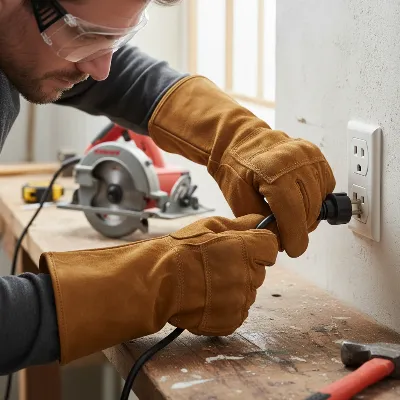 Circular Saw User Wearing Safety Glasses and Gloves Disconnecting Power
Step-by-Step Guide to Unjamming Your Circular Saw Blade
Once you’ve ensured your safety, you can proceed with freeing the stuck blade. The approach depends on the severity of the jam.
Assess the Situation
First, take a moment to observe how the blade is stuck. Is it lightly pinched, or deeply embedded and immovable? Is there visible debris around the blade or in the cut? Understanding the jam will guide your next actions.
Relieve Pressure on the Workpiece
If the blade is pinched by the material, the primary goal is to relieve that pressure.
- Support the Workpiece: If the material is sagging or moving, carefully re-support it. You might need to add additional saw horses, clamps, or even have a helper steady the piece. The goal is to prevent the cut from closing in further on the blade.
- Gently Widen the Kerf: For mild binds, you can sometimes gently pull the two sides of the workpiece apart with your hands (while avoiding contact with the blade). For more stubborn binds, carefully insert a thin wedge (like a wooden shim or a flat screwdriver, used with extreme caution) into the kerf behind the blade to gently pry the cut open. Do this slowly to avoid splitting the wood or damaging the blade.
Carefully Free the Blade
With pressure relieved, you can now focus on the blade itself.
- Clear Debris: Use a brush or compressed air to remove any sawdust, wood chips, or foreign objects that might be jamming the blade. Never use your bare hands.
- Gentle Movement: With one hand firmly on the saw’s handle and the other stabilizing the workpiece, try to gently rock the saw back and forth along the cutting line. Avoid forceful movements. The aim is to slowly work the blade free from the kerf.
- Back Out Slowly: Once the blade shows signs of movement, slowly and steadily pull the saw backward, away from the cutting line. Maintain a straight path to prevent re-pinching.
Inspect the Blade and Saw
After successfully unjamming the blade, always perform a thorough inspection before resuming work.
- Check the Blade: Look for any signs of damage, such as bent teeth, a warped plate, or excessive resin buildup. If the blade is damaged or dull, it’s time for a replacement or sharpening. Clean off any remaining pitch or debris.
- Check the Saw: Ensure the blade guard moves freely and retracts properly. Confirm the arbor nut is tight, and there are no visible issues with the saw’s motor or housing.
- Test Spin (Unplugged): With the power still disconnected, manually spin the blade to check for any binding or unusual resistance. Then, if safe, briefly plug in (or insert battery) and run the saw without cutting to ensure it operates smoothly.
Preventing Future Blade Jams: Best Practices
Prevention is always better than cure. Adopting good practices can significantly reduce the likelihood of your circular saw blade getting stuck again.
Use the Right Blade, Keep it Sharp and Clean
- Match Blade to Material: Always select a blade appropriate for the material you’re cutting. Use lower tooth count blades for ripping solid wood and higher tooth count blades for crosscutting and sheet goods to ensure efficient chip evacuation and reduce friction.
- Maintain Sharpness: A sharp blade cuts effortlessly, generating less heat and friction. Replace or sharpen dull blades promptly.
- Clean Regularly: Periodically clean your blade with a dedicated resin cleaner to remove pitch and sap buildup. A clean blade cuts more smoothly and efficiently.
Proper Blade Depth Adjustment
Set the blade depth so that only a minimal amount of the blade (roughly one tooth’s height, or 1/8 to 1/4 inch) extends below the workpiece. This minimizes the amount of blade exposed to the material, reducing friction and the chance of binding. Make adjusting blade depth a habit for every new cut or material.
Secure and Support Your Workpiece Correctly
Proper support is crucial to prevent pinching.
- Clamp Material: Always clamp your workpiece firmly to a workbench or sawhorse. This prevents shifting and movement during the cut.
- Support Both Sides: When cutting larger pieces, ensure both the main workpiece and the offcut are adequately supported. This prevents the kerf from closing and pinching the blade as the cut progresses.
- Use Spacers: For longer rips, strategically placing wedges or nails into the kerf behind the blade can help keep the cut open and prevent binding.
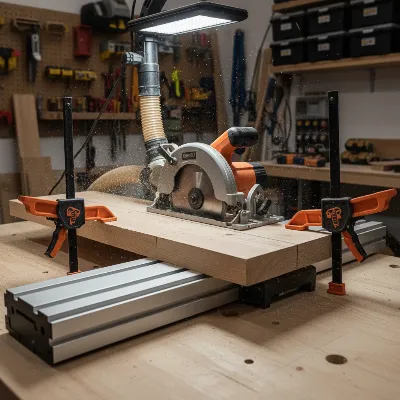 Circular Saw Blade Cutting Through Wood with Proper Support and Clean Blade
Maintain a Straight Cutting Line
Any deviation or twisting of the saw can cause the blade to bind.
- Use a Guide or Fence: For long, straight cuts, use a straightedge guide or a rip fence to keep the saw moving precisely.
- Focus and Control: Maintain a firm grip with both hands on the saw and guide it steadily through the material. Avoid rushing or forcing the cut.
Avoid Forcing the Cut
Let the saw do the work. Pushing the saw too hard or trying to cut too quickly overwhelms the blade, generates excessive heat, and increases the risk of binding and kickback. Allow the blade to reach full speed before engaging the material and maintain a consistent, moderate feed rate. If the saw seems to be struggling, assess the blade’s sharpness, depth, and the cut’s alignment.
Conclusion
Encountering a stuck circular saw blade can be a frustrating and potentially hazardous experience, but with the right knowledge and a methodical approach, it’s a problem you can quickly resolve. the cornerstone of any solution is safety: always disconnect power, wear appropriate PPE, and ensure the blade is fully stopped before taking any action. By understanding the common causes like pinching, dull blades, or improper technique, you’re better equipped to not only unjam your saw but also to prevent future occurrences. Implementing best practices—such as using sharp, clean blades, setting the correct depth, adequately supporting your workpiece, and maintaining a straight, unforced cut—will ensure your circular saw operates efficiently and safely for all your projects. What are your go-to safety checks before every circular saw cut?
Frequently Asked Questions
What are the signs of a dull circular saw blade?
Signs of a dull circular saw blade include increased effort required to push the saw, burning smells or smoke coming from the wood, jagged or rough cuts, excessive tear-out, and the saw binding or struggling more frequently. A dull blade often leaves burn marks on the wood’s surface.
Can I use WD-40 to unjam my blade?
If your blade is stuck in the wood, WD-40 is not the solution. Focus on relieving pressure on the workpiece and carefully backing out the saw. However, if the blade’s arbor nut is seized, preventing you from changing a blade, penetrating oil like WD-40 or Kroil can be applied to the threads to help loosen it, but this is a different issue than a blade stuck in a cut.
Why does my circular saw kick back?
Circular saw kickback occurs when the blade binds or stalls suddenly in the wood, causing the saw to be thrust backward or upward toward the operator. Common causes include improper workpiece support causing pinching, a dull or damaged blade, twisting the saw during a cut, or trying to force the saw through material too quickly.
How often should I clean my circular saw blade?
The frequency of blade cleaning depends on usage and the type of material being cut. If you’re cutting resinous wood like pine or treated lumber, pitch buildup can happen quickly. It’s a good practice to inspect and clean your blade after several hours of use or whenever you notice a decrease in cutting performance, increased friction, or burning.
