Circular saw kickback, a sudden and violent reaction where the saw or workpiece is propelled with significant force, can be effectively prevented by maintaining sharp blades, ensuring proper workpiece support, and employing correct cutting techniques. This dangerous occurrence, often caused by blade binding, can lead to serious injuries such as deep lacerations or broken bones, making proactive prevention essential for all woodworkers.
Understanding Circular Saw Kickback: Causes and Dangers
Kickback happens when the rotating saw blade binds or stalls suddenly in the wood, propelling the saw backward towards the operator or violently ejecting the workpiece. This uncontrolled movement can cause severe injuries, including deep lacerations and broken bones, due to the blade’s high speed, which allows kickback to occur in a fraction of a second.
Several factors contribute to circular saw kickback:
- Blade Binding: This is the most common cause, occurring when the kerf (the slot cut by the blade) closes around the blade, pinching it. This can result from internal wood stresses, improper support causing workpiece sag, or a twisted blade during the cut.
- Dull, Dirty, or Damaged Blades: A dull blade requires more force, increasing friction and binding risk. Sap or pitch buildup can thicken the blade, reducing clearance. Bent, warped, or damaged blades are inherently unsafe and highly prone to kickback.
- Improper Blade Selection or Depth Setting: Using the wrong blade for the material or cut type (e.g., a crosscut blade for ripping) increases resistance. Setting the blade too shallow or too deep can also cause binding. A blade set only 1/8 to 1/4 inch deeper than the material minimizes exposed blade surface, reducing kickback severity.
- Unsuitable Workpiece Conditions: Cutting knotty, warped, or pitchy wood increases binding chances due to unpredictable internal stresses. Insufficient support for large panels can lead to sagging and pinching.
- Operator Error: Forcing the saw, not holding it firmly with both hands, an unstable body position, or removing the saw while the blade is spinning are common mistakes that trigger kickback.
Essential Prevention Strategies: Before You Cut
Preparation is crucial for preventing kickback. Properly setting up your saw and workpiece significantly reduces risks.
Tool Maintenance and Blade Selection
Maintaining your circular saw and choosing the right blade are fundamental safety practices.
- Keep Blades Sharp and Clean: Sharp blades cut efficiently with less friction, reducing binding. Regularly clean saw blades to remove sap and pitch buildup, which increases blade thickness and friction.
- Use the Right Blade: Select a blade appropriate for the material (e.g., plywood, hardwood, softwood) and cut type (ripping, crosscutting). Ensure the blade has the proper size arbor hole and its speed rating meets or exceeds the saw’s RPM.
- Check Blade Condition and Alignment: Before each use, inspect the blade for damage like bent or missing teeth, or warping. Ensure the blade is properly seated and secured with correctly assembled blade washers (flanges).
- Verify Blade Guard Function: Always confirm the lower blade guard operates freely and returns to its closed position quickly. Never defeat or tie back the guard.
- Set Blade Depth Correctly: Adjust the blade depth so it extends approximately 1/8 to 1/4 inch (or about one tooth’s height) beyond the material thickness. This minimizes exposed blade and reduces kickback leverage.
Workpiece Preparation
|
Our Picks for the Best Circular Saw in 2026
As an Amazon Associate I earn from qualifying purchases.
|
||
| Num | Product | Action |
|---|---|---|
| 1 | Cordless Circular Saw 6-1/2" for Makita 18V Battery (Not Inclued), 4500RPM Power Circular Saws w/Laser Guide, 0-45° Bevel Capability, Max 2-3/16" Depth, Electric Saw for Wood Plastic |

|
| 2 | Mini Circular Saw, 4Amp 3500RPM Corded Compact Saw with 4-1/2" 24T TCT Blades, Laser Guide, Rip Guide, Vacuum Adapter and Blade Wrench, Max Cutting Depth 1-11/16"(90°), 1-1/8"(45°) |
|
| 3 | RIDGID 18V Cordless 6 1/2 in. Circular Saw (Tool Only) |
|
| 4 | Ridgid ZRR32104 THRUCOOL 7-1/4 in. Worm Drive Saw (Renewed) |
|
| 5 | RYOBI Circular Saw CSB125 13-Amp 7-1/4 in. Electric (Renewed) |
|
| 6 | Makita 5377MG 7-1/4" Magnesium Hypoid Saw |
|
| 7 | Seesii Mini Circular Saw with Laser Guide,4.8A 4000 RPM Compact Corded Circular Saw with Rip Guide,3 Blades (4-1/2") for Wood,Soft Metal,Tile,Plastic Cutting,Max Cut Depth 1-11/16"(90°),1-1/8" (45°) |
|
| 8 | Ryobi 14 Amp 7-1/4" Adjustable Electric Circular Saw w/Exactline Laser | CSB135L |
|
| 9 | RIDGID 18V SUBCOMPACT BRUSHLESS Cordless 6-1/2 in. Circular Saw Tool ONLY R8656B |
|
| 10 | Makita 5477NB 7-1/4" Hypoid Saw |
|
How you prepare and support your material plays a crucial role in preventing kickback.
- Securely Clamp Your Material: Always clamp your workpiece firmly to a workbench or sawhorses. Never hold material by hand or across your leg while cutting, as any movement can lead to binding.
- Adequate Workpiece Support: For large panels, ensure full support on both sides of the cut line to prevent sagging and blade pinching. The offcut piece should fall away freely. For long rips, insert small wedges or nails into the kerf behind the blade to keep the cut open.
- Inspect Wood for Flaws: Be cautious when cutting wood with knots, warps, or excessive pitch, as these irregularities cause unpredictable blade binding. Avoid cutting through severe knots if possible.
- Clear the Work Area: A cluttered workspace leads to accidents. Ensure your cutting path is clear of obstructions, including the power cord, and that you have ample space to maneuver the saw.
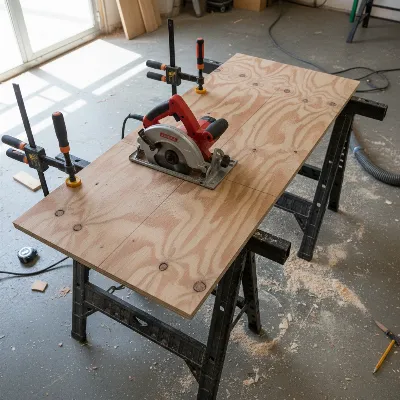 Proper workpiece support for circular saw to prevent kickback
Safe Operating Techniques to Avoid Kickback
Even with the best preparation, improper technique can still lead to kickback. Master these operating practices for maximum safety.
Proper Stance and Grip
Your body position and grip on the saw are vital for control and safety.
- Maintain a Firm, Two-Handed Grip: Always hold the circular saw firmly with both hands for maximum control and to resist sudden tool movements. Do not use a saw that feels too heavy or unwieldy.
- Position Your Body Safely: Stand slightly to the side of the cut line, not directly behind the saw. This reduces the likelihood of the saw striking you directly if kickback occurs. Position your arms to resist kickback forces.
- Avoid Overreaching: Maintain a balanced stance and avoid overextending your reach. If a cut requires stretching, reposition yourself or the workpiece. Loss of balance can lead to loss of saw control.
Starting and Guiding the Cut
The beginning and continuation of your cut require precision and attention.
- Full Speed Before Engagement: Before the blade touches the wood, pull the trigger and allow the saw blade to reach its full operating speed. Engaging the wood with a slowly accelerating blade increases binding and kickback risk.
- Use a Straight Edge or Guide: For accurate and straight cuts, especially when ripping, use a clamped straight edge or a saw guide. This prevents the blade from twisting or veering off course, which can cause binding.
- Steady, Continuous Feed Rate: Feed the saw into the material at a consistent and moderate pace. Let the saw do the work; forcing it will strain the motor and increase kickback risk.
- Don’t Pull Back While Blade is Spinning: Never attempt to pull the saw backward out of a cut while the blade is still rotating. This action can cause the back of the blade teeth to catch the wood and lead to violent kickback.
Responding to Binding
Knowing how to react if the blade starts to bind is critical to preventing full-blown kickback.
- Immediate Trigger Release: If you feel the saw binding, hear the motor strain, or sense any kickback motion, immediately release the trigger. Keep a firm grip and hold the saw motionless until the blade comes to a complete stop.
- Do Not Remove While Spinning: Resist the urge to yank the saw out of the material while the blade is still moving. Wait for the blade to stop before carefully backing the saw out of the kerf.
- Investigate and Correct: After the blade has stopped, examine the workpiece and blade to determine the cause of binding. Is the kerf closing? Is there a knot? Adjust your setup or technique before restarting the cut. When restarting, ensure the saw blade is centered in the kerf and not engaged with the material before restarting the saw to full speed.
Advanced Anti-Kickback Features and Tools
Modern circular saws and accessories incorporate features designed to enhance safety and prevent kickback.
- Riving Knives and Splitters: A riving knife, located directly behind the saw blade and slightly thinner than the kerf, moves with the blade to keep the kerf open after the cut, preventing wood from pinching the blade. Some track saws incorporate similar mechanisms.
- Anti-Kickback Pawls: Primarily found on table saws, these spring-loaded teeth grip the workpiece if it attempts to move backward, stopping kickback.
- Track Saws: These specialized circular saws operate on a guide rail, providing superior stability and precision. The track ensures the saw moves in a perfectly straight line, significantly reducing blade twisting and binding risks. Many track saws also feature integrated anti-kickback mechanisms.
- Electronic KickbackStop Technology: Some advanced circular saws, like Festool plunge-cut saws, feature electronic sensors that detect sudden rotational changes indicative of kickback. These systems can instantly stop the blade or motor, often faster than human reaction time, minimizing injury risk.
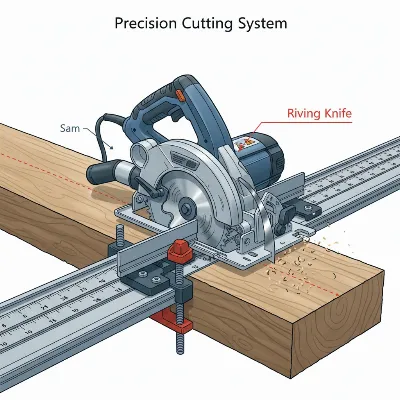 Circular saw with track and riving knife for kickback prevention
General Safety Practices for Circular Saw Use
Beyond kickback prevention, general safety practices are essential for operating any power tool.
- Wear Appropriate Personal Protective Equipment (PPE): Always wear safety goggles or glasses with side shields to protect eyes from flying debris. Use hearing protection, especially during extended operation. A dust mask is advisable in dusty conditions.
- Avoid Loose Clothing and Jewelry: Loose clothing, long hair, or jewelry can get caught in rotating parts, pulling you into the blade. Tie back long hair and secure loose clothing.
- Ensure Cord Clearance: Before starting a cut, make sure the power cord and any extension cords are clear of the blade’s path and long enough to complete the cut without snagging.
- Never Defeat Safety Guards: Guards are for your protection. Never tie them back, remove them, or tamper with them to expose the blade.
- Choose a Controllable Saw: Select a circular saw that you can comfortably and safely control. An overly heavy or powerful saw can be more difficult to manage, increasing accident risk.
> “Kickback isn’t just an inconvenience; it’s a critical safety issue that demands respect and proactive prevention. Every cut is an opportunity to reinforce safe habits.” – John Doe, Master Carpenter and Safety Instructor
Conclusion
Preventing circular saw kickback involves meticulous preparation, correct technique, and respect for the tool’s power. By ensuring sharp, clean blades, securely supported workpieces, and precise, controlled cutting methods, you can dramatically reduce this dangerous occurrence. Embracing advanced safety features and consistently following general power tool safety guidelines further enhances protection. Approach every cut with confidence, care, and an unwavering commitment to safety.
Frequently Asked Questions
What is the most common cause of circular saw kickback?
The most common cause of circular saw kickback is the blade binding or pinching in the workpiece, often due to the kerf closing around the blade, a twisted cut, or improper material support. This binding creates sudden resistance, causing the saw to be violently thrown backward towards the operator.
Can a dull blade cause circular saw kickback?
Yes, a dull blade significantly increases the risk of kickback. It requires more force to cut, generates excessive friction, and struggles to clear sawdust, all of which heighten the likelihood of the blade binding in the material and causing a violent kickback reaction.
How does a riving knife help prevent kickback on a saw?
A riving knife is a safety device positioned directly behind the saw blade, slightly thinner than the kerf. Its primary function is to keep the cut-out slot (kerf) open as the blade passes through, preventing the material from pinching the blade and thereby greatly reducing the risk of kickback.
Is it safer to set a circular saw blade deeper for cuts?
No, it is generally safer to set the blade depth so it extends only about 1/8 to 1/4 inch (or one tooth's height) beyond the material being cut. This minimizes the exposed blade surface and reduces the chances of the blade catching on unseen obstructions or leveraging against the workpiece in a kickback scenario.
What should I do immediately if my circular saw kicks back?
If your circular saw kicks back, immediately release the trigger and maintain a firm grip on the tool, allowing the blade to come to a complete stop. Do not attempt to remove the saw while the blade is still spinning. Once stopped, carefully back the saw out and assess the cause of the kickback before resuming work.
How to Prevent Circular Saw Kickback
Preventing circular saw kickback involves a combination of proper tool maintenance, workpiece preparation, and safe operating techniques to ensure safety and project success.
Ensure your circular saw blades are always sharp and free of sap or pitch buildup. Sharp blades cut efficiently with less friction, significantly reducing the chance of binding and subsequent kickback. Regularly cleaning blades also prevents increased thickness and friction.
Always clamp your material firmly to a workbench or sawhorses, ensuring it is fully supported on both sides of the cut line. This prevents sagging and pinching of the blade, which are common causes of kickback. Never attempt to hold the material by hand while cutting.
Set the blade depth so it extends only 1/8 to 1/4 inch beyond the material thickness, minimizing exposed blade. Additionally, select the appropriate blade type for the material and cut (e.g., crosscut vs. rip blade) to reduce resistance and binding.
Maintain a firm, two-handed grip on the saw and stand slightly to the side of the cut line, not directly behind it. This body positioning provides maximum control and reduces the risk of direct impact if kickback occurs. Avoid overreaching to maintain balance.
Allow the saw blade to reach full operating speed before engaging the wood. Use a clamped straight edge or saw guide for accurate, straight cuts, and maintain a steady, continuous feed rate. Never pull the saw backward out of a cut while the blade is still spinning.

The section on proper workpiece support was super helpful. I used to just eyeball it sometimes, but after reading this, I’m much more careful about clamping everything down securely. It’s made a noticeable difference in how stable my cuts are, especially with longer pieces of plywood. Definitely reduced my anxiety about the saw binding.
I’ve had a few close calls with kickback over the years, and the tip about maintaining sharp blades really hit home. It’s easy to get complacent, but a dull blade is just asking for trouble. Since I started sharpening regularly, my cuts are cleaner and I feel a lot safer. Great advice for anyone using a circular saw.
I appreciate the focus on preventing injuries like lacerations and broken bones, which is a real concern. However, I wish there was a bit more detail on specific types of clamps or jigs that are best for different materials. The general advice is good, but some practical examples would have made it even better for a beginner like me.
This was a fantastic reminder about correct cutting techniques. I sometimes rush through cuts, especially on bigger projects, and that’s exactly when kickback can happen. Slowing down and focusing on a consistent feed rate has made my work much safer and more accurate. It’s a simple change but makes a huge difference.