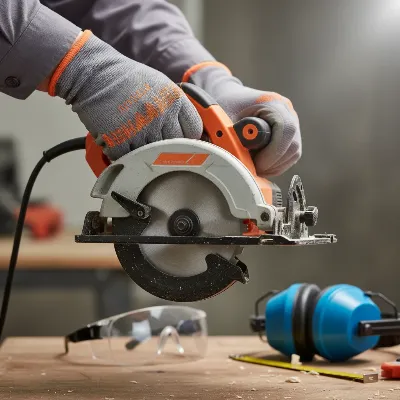
Few things are as frustrating in the workshop as a circular saw blade that refuses to cut cleanly. The motor groans, the wood smokes, and your once-precise cuts become ragged, splintered edges. A dull blade doesn’t just ruin your project; it compromises safety and puts unnecessary strain on your valuable tools. But don’t despair! Learning to sharpen a dull circular saw blade yourself is a rewarding skill that can save you money, extend the life of your blades, and get you back to making smooth, efficient cuts. This comprehensive guide will walk you through everything you need to know, from identifying a dull blade to the step-by-step sharpening process, vital safety precautions, and essential maintenance tips.
Recognizing a Dull Circular Saw Blade
Before you grab your sharpening tools, it’s crucial to confirm your blade is indeed dull. Using a circular saw with a blunt blade forces you to push harder, increasing the risk of kickback, causing premature motor wear, and producing subpar results. Here are the tell-tale signs:
- Slow Cuts and Increased Effort: A sharp blade slices through material with minimal resistance. If you find yourself having to force the saw, or if the cutting speed has significantly decreased, your blade is likely dull.
- Rough or Ragged Edges: Instead of clean, crisp cuts, a dull blade will tear and splinter the material, leaving an uneven or fuzzy edge.
- Burn Marks on Wood: Increased friction from a blunt edge trying to grind its way through material generates excessive heat, often resulting in unsightly burn marks along the cut line and even a burning smell.
- Increased Vibration and Noise: A dull blade can cause the saw to vibrate more intensely and produce unusual screeching or squealing sounds as it struggles to cut.
- Splintering and Tear-out: Especially in delicate materials or when crosscutting, a dull blade will pull and rip fibers rather than severing them cleanly, leading to significant splintering.
- Visual Inspection: Examine the teeth closely. Sharp teeth will have a defined, pointed edge. Dull teeth may appear rounded, polished, or even have small chips on their cutting surfaces.
If you notice one or more of these symptoms, it’s time to consider sharpening or replacing your blade.
Essential Tools and Materials for DIY Sharpening
To safely and effectively sharpen your circular saw blade by hand, you’ll need a few key items. Gathering these beforehand will ensure a smooth process.
- Safety Gear:
- Cut-resistant Gloves: Essential for protecting your hands from sharp edges.
- Eye Protection (Safety Glasses/Goggles): To shield your eyes from flying metal particles.
- Cleaning Supplies:
- Blade Cleaner: A citrus-based cleaner or a specialized resin remover.
- Wire Brush: A stiff wire brush (a brass brush is ideal for carbide-tipped blades as it’s less abrasive) to scrub off pitch and resin.
- Rags: For wiping and drying the blade.
- Sharpening Tools:
- Diamond File: Absolutely essential for sharpening carbide-tipped blades, as carbide is harder than standard steel. A flat diamond-coated paddle file works well for the tooth face.
- Triangular File: Suitable for sharpening high-speed steel (HSS) blades, which are less common now but still found.
- Blade Holder/Vise: A sturdy bench vise, ideally with wooden jaw protectors, or a specialized blade sharpening jig to hold the blade firmly in place.
- Clamps: To further secure the blade or jig to a workbench.
- Permanent Marker: For marking your starting tooth.
Remember, a standard steel file will not work on carbide-tipped blades; it will simply slide off without removing any material. Investing in a good quality diamond file is crucial for success.
 A collection of essential tools for DIY circular saw blade sharpening, including a diamond file, safety glasses, gloves, a cleaning solution, a wire brush, a permanent marker, and a bench vise with a circular saw blade secured in place. The tools are neatly arranged on a workbench with sawdust in the background, suggesting a workshop environment. The lighting is bright and focused on the tools, with a shallow depth of field.
Step-by-Step Guide to Sharpening Your Circular Saw Blade by Hand
Sharpening a circular saw blade by hand is a meticulous but rewarding process. Take your time, focus on consistency, and follow these steps for optimal results.
Step 1: Prioritize Safety Above All Else
Table is empty.Before you even think about touching the blade, ensure your circular saw is completely disconnected from its power source. If it’s a cordless saw, remove the battery. Always wear your cut-resistant gloves and eye protection throughout the entire process. Metal filings can fly, and the sharp edges of a saw blade demand utmost respect.
Step 2: Remove and Clean the Blade Thoroughly
Carefully remove the circular saw blade from your saw. Refer to your saw’s manual for specific instructions on how to do this safely, usually involving a blade wrench and arbor lock. Never attempt to sharpen a blade while it’s still mounted on the tool.
Once removed, give the blade a thorough cleaning. Pitch, resin, and sawdust buildup can mimic dullness and interfere with sharpening. Soak the blade in a tray of blade cleaner or a degreasing solution for several minutes. Then, use your wire brush to scrub away all accumulated gunk from the teeth and plate. Pay extra attention to the gullets (the spaces between the teeth). Rinse the blade with water and dry it completely with a clean rag. A clean blade allows you to clearly see the actual condition of the cutting edges.
Step 3: Secure the Blade for Sharpening
Mount the cleaned blade securely in a sturdy bench vise. If your vise has metal jaws, use wooden jaws or wood blocks to protect the blade’s plate from damage. The goal is to hold the blade absolutely still, preventing any wobble or rotation during filing. Position the blade so that the teeth you are working on are facing upwards and are at a comfortable height for you to access. The less the blade protrudes from the vise, the less vibration you’ll encounter.
Step 4: Mark Your Starting Tooth
Using a permanent marker, color the top of the first tooth you intend to sharpen. This simple step is critical for keeping track of your progress and ensures you don’t accidentally sharpen the same teeth twice or miss any, which can lead to an unbalanced blade and poor cutting performance.
Step 5: Identify and Match the Tooth Angle
Examine the carbide tip (or steel tooth) of the marked tooth. You’ll notice that the “face” of the tooth—the part that strikes the material during cutting—is ground at a specific angle. This is your target angle. Your primary goal in DIY sharpening is to precisely match this existing factory angle with your file. Most standard general-purpose blades have a relatively straight or slightly angled face. Some blades, particularly those with Alternate Top Bevel (ATB) grinds, may also have a bevel on the very top of the tooth, but for basic DIY hand sharpening, focusing on the face is generally sufficient. Position your diamond file flat against the face of the tooth and adjust your hand until the file sits perfectly flush against the entire carbide surface.
> “The secret to effective blade sharpening isn’t brute force, but precision and consistency. Always match the original angle of the tooth, and count your strokes for a uniform edge.” – Admin, ReviewsBlaze.com
Step 6: Sharpen Each Tooth
With the blade secured and your target angle established, it’s time to sharpen. Apply firm, even pressure and push the diamond file across the face of the tooth in one smooth, forward motion, moving towards the tooth’s point. Never use a back-and-forth scrubbing motion, as this can dull your file and create an inconsistent edge. Lift the file slightly on the return stroke.
Consistency is key: perform 3 to 5 light, consistent strokes on each tooth. If you do four strokes on the first tooth, do four strokes on every subsequent tooth. Sharpen every other tooth first (e.g., all left-leaning teeth), then rotate the blade and sharpen the remaining teeth (all right-leaning teeth) to maintain the alternating pattern of many circular saw blades. After sharpening each tooth, loosen your vise or clamp slightly, rotate the blade to the next unsharpened tooth, and re-secure it firmly before repeating the filing process. Continue this until you have sharpened every tooth around the blade, returning to your marked starting point.
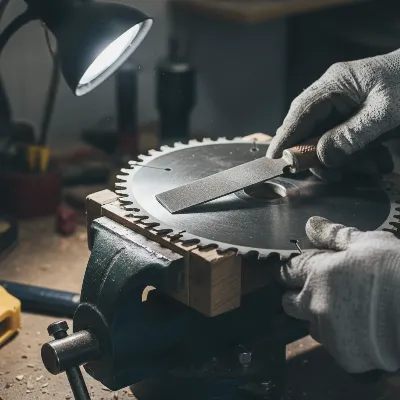 A close-up, detailed shot of a person using a diamond file to sharpen a circular saw blade tooth, which is securely held in a workbench vise. The person's hands are wearing protective gloves, and the file is held at the correct angle to match the tooth's geometry. The focus is on the blade and the file, with clear visibility of the sharpening action. The lighting is direct and highlights the metal surface.
Step 7: Inspect Your Work and Reinstall
Once you’ve completed sharpening all the teeth, inspect your work under good lighting. Check for uniform sharpness on each tooth and ensure no dull spots or chips remain. The freshly sharpened edges should feel keen and consistent. Clean any fine metal dust or residue from the blade using a rag.
Carefully reinstall the sharpened blade onto your circular saw, ensuring all components are properly aligned and tightened according to the manufacturer’s specifications. Before any critical cuts, always perform a test cut on a piece of scrap material to confirm smooth operation and improved cut quality.
Advanced Sharpening Considerations and When to Seek Professional Help
While DIY hand sharpening is effective for general touch-ups and can significantly extend a blade’s life, it does have limitations. For intricate tooth geometries or extensive damage, professional sharpening services offer unparalleled precision.
Hand sharpening primarily focuses on refreshing the face of the tooth. Blades with complex grinds, such as Alternate Top Bevel (ATB) for cleaner crosscuts or Triple Chip Grind (TCG) for cutting laminates and non-ferrous metals, often require the top bevels and sometimes side angles to be precisely reground. Achieving this level of accuracy by hand is extremely challenging, if not impossible.
When professional sharpening is recommended:
- Carbide Blades with Complex Geometries: If your blade has intricate tooth patterns beyond a simple flat-top grind.
- Significant Damage: Blades with major chips, cracks, or teeth that are badly out of alignment. Professionals have specialized grinding machines that can restore original tooth geometry and balance the blade accurately.
- Warped Blades: A warped blade cannot be fixed by sharpening and should be replaced or professionally assessed.
- When Precision is Paramount: For fine woodworking or critical projects where even minor imperfections are unacceptable.
Professional services use powerful grinding machines that work faster and more precisely than manual sharpening, ensuring every tooth is restored to its factory specifications, including rake, bevel, and set angles. While a DIY approach is cost-effective, particularly for basic blades, the cost of professional sharpening can often be a sound investment for higher-quality or more expensive blades, often ranging from $0.50 to $1.00 per tooth.
Safety First: Crucial Precautions During Blade Sharpening
Working with sharp tools always carries inherent risks, and sharpening a circular saw blade is no exception. Adhering to strict safety guidelines is non-negotiable to prevent accidents and injuries.
- Always Disconnect Power: The absolute first step is to remove the battery or unplug the saw from the mains before you begin any work on the blade. An accidental start-up can cause severe injury.
- Wear Appropriate PPE: Always wear cut-resistant gloves and safety glasses or goggles. Fine metal particles can become airborne during filing, and direct contact with a sharp, exposed blade can cause deep cuts.
- Secure the Blade Firmly: A wobbly or unsecured blade is a recipe for disaster. Ensure it is clamped tightly in a vise or jig and cannot move or rotate unexpectedly. This provides stability for precise filing and prevents the blade from slipping and cutting you.
- Maintain Control of the File: Always push the file in a controlled, forward motion. Never let your hand slip towards the sharp edge of the blade. Lift the file on the return stroke to avoid dulling its cutting edges and to maintain stroke consistency.
- Handle Sharpened Blades with Extreme Care: Once sharpened, the blade’s edges will be razor-sharp. Handle it by the plate, avoiding direct contact with the teeth, especially when reinstalling it on the saw.
By taking these precautions seriously, you can ensure your DIY blade sharpening experience is safe and successful.
Maintaining Blade Sharpness and Longevity
Sharpening your blade is just one part of its lifecycle. Proper maintenance between sharpening sessions can significantly extend its overall lifespan and ensure optimal performance.
- Regular Cleaning: Pitch, resin, and sawdust accumulate on blades, causing friction and making the blade appear dull even when it’s still sharp. Clean your blades after every few uses (or after cutting resinous woods) with a specialized blade cleaner and a wire brush. This prevents buildup from hardening and hindering cutting efficiency.
- Use the Right Blade for the Job: Using a general-purpose blade for heavy-duty ripping or trying to cut metal with a wood blade will rapidly dull or damage it. Always choose the correct blade type (e.g., rip, crosscut, combination, metal-cutting) and tooth count for the material and cut you’re making.
- Avoid Cutting Nails or Metal: Accidentally hitting embedded nails, screws, or other metal objects in your workpiece is one of the quickest ways to chip or dull carbide tips beyond repair. Always inspect your material for foreign objects before cutting.
- Proper Storage: Store your circular saw blades properly to protect their sharp edges. Ideally, hang them individually on a pegboard or store them in a protective case designed for saw blades. Avoid stacking them directly on top of each other where teeth can rub and dull. Keep blades dry to prevent rust, which can compromise the blade’s integrity and lead to difficult cleaning.
By incorporating these maintenance habits, you’ll find yourself sharpening less often and getting more life out of each blade.
When to Sharpen Versus Replace Your Circular Saw Blade
The decision to sharpen or replace a circular saw blade often comes down to cost, efficiency, and the extent of the damage. While sharpening is a cost-effective solution for many dull blades, there are times when replacement is the wiser choice.
Sharpen if:
- Simply Dull: The primary cutting edges are rounded or worn, but the blade plate and teeth are otherwise in good physical condition.
- No Major Damage: There are no broken or missing teeth, significant chips, or deep cracks in the carbide tips.
- Cost-Effective: For higher-quality carbide-tipped blades, sharpening (either DIY or professional) is typically much cheaper than purchasing a brand new blade. Basic steel blades are also easily sharpened.
- Early Signs of Dullness: Addressing dullness early can prevent further damage and preserve the blade’s integrity for future sharpenings.
Replace if:
- Broken or Missing Teeth: A blade with missing teeth is unbalanced and dangerous. It will vibrate excessively and cannot cut effectively or safely.
- Severely Chipped or Rounded Carbide Tips: If the carbide tips are extensively damaged, or if they’ve been sharpened multiple times to the point where they are significantly reduced in size, their cutting effectiveness is compromised.
- Warped or Bent Blade Plate: If the body of the blade is bent, warped, or has hairline cracks, it’s unsafe to use and cannot be salvaged by sharpening the teeth.
- Deep Rust or Corrosion: While surface rust can be cleaned, deep corrosion that compromises the blade’s structural integrity means it’s time for a new one.
- Poor Performance After Sharpening: If a blade has been sharpened multiple times and still fails to deliver clean, efficient cuts, it has likely reached the end of its useful life.
A good rule of thumb is that if a high-quality blade costs $40 or more, sharpening is often a worthwhile investment. For cheaper blades, the cost of professional sharpening might approach or exceed the cost of a new one, making DIY sharpening or replacement more practical.
Conclusion
A sharp circular saw blade is the cornerstone of safe, efficient, and high-quality work in any workshop. While buying a new blade might seem like the easiest solution, mastering the art of DIY sharpening is a valuable skill that empowers you to take control of your tools, save money, and contribute to a more sustainable workshop. By understanding the signs of a dull blade, gathering the right tools, and meticulously following the step-by-step sharpening process with unwavering attention to safety, you can restore your blade’s keen edge. Remember to clean and maintain your blades regularly to prolong their life, and recognize when it’s time to entrust your blades to a professional or invest in a new one.
What sharpening challenges have you faced, and how have you overcome them to keep your saw blades in top condition?
Câu Hỏi Thường Gặp
Can all circular saw blades be sharpened at home?
While most high-speed steel (HSS) blades can be sharpened by hand with a triangular file, carbide-tipped blades are much harder and require a diamond file. Blades with complex tooth geometries or significant damage are often best left to professional sharpening services that use specialized grinding machines for precision.
How often should I sharpen my circular saw blade?
The frequency of sharpening depends heavily on your usage, the material you cut, and the blade’s quality. There’s no fixed schedule; instead, pay attention to the signs of dullness like slow cuts, burn marks, or rough edges. Sharpening when these signs first appear can prevent further damage and maintain performance.
What is the best type of file for sharpening carbide-tipped blades?
For carbide-tipped Circular Saw blades, a diamond file is essential. Carbide is an extremely hard material, and a standard steel file will not be effective. A flat diamond-coated paddle file is ideal for addressing the face of the carbide teeth during DIY sharpening.
Why do I see burn marks on the wood when I’m cutting?
Burn marks on your workpiece are a primary indicator of a dull saw blade. A blunt blade generates excessive friction as it attempts to grind through the material instead of cleanly cutting it, leading to heat buildup and scorching. It can also indicate an incorrect feed rate or a dirty blade.
Is it more cost-effective to sharpen a blade or buy a new one?
For most quality carbide-tipped blades, DIY sharpening is significantly more cost-effective than buying new. Professional sharpening can also be cheaper than a new premium blade. However, for inexpensive steel blades or severely damaged blades, purchasing a new blade might be a more practical or safer option.