Maintaining your circular saw is crucial for optimal performance, safety, and longevity, with regular cleaning and blade inspection being the most critical steps. Neglecting maintenance can lead to inaccurate cuts, frustrating breakdowns, and potential safety hazards. This guide provides essential tips to keep your circular saw in peak condition, ensuring it remains a reliable partner for every DIY project.
An Overview of Circular Saws
A circular saw is a versatile power tool designed for cutting various materials like wood, plastic, and metal using a rotating, toothed blade. It excels at making straight, cross, and angled cuts quickly, making it indispensable in any workshop. Models range from corded, offering consistent power, to cordless, providing portability. Circular saws handle thicker materials more easily than jigsaws or reciprocating saws, but require careful handling to prevent kickback. Proper maintenance extends the tool’s life, preserves cutting accuracy, and ensures operator safety.
Types of Circular Saws and Their Maintenance Nuances
Understanding different circular saw types helps identify specific maintenance needs to prolong their lifespan and ensure optimal performance for DIY projects.
By Power Source: Corded vs. Cordless Circular Saws
Corded circular saws provide continuous power for heavy-duty tasks. Maintenance focuses on inspecting the power cord for fraying, cuts, or exposed wires, which are significant electrical hazards. Keeping the plug clean and corrosion-free ensures reliable power delivery.
Cordless circular saws, powered by rechargeable batteries, offer unmatched portability. Their maintenance centers on battery care: storing batteries in a cool, dry place, avoiding extreme temperatures, and following manufacturer charging guidelines. Regularly cleaning battery terminals and the tool’s receptacle prevents connection issues.
By Usage: Handheld, Table, and Miter Saws
While handheld circular saws offer cutting flexibility, table saws and miter saws are fixed tools designed for precision. For handheld saws, ensure all guards move freely and the base plate is clean. Table and miter saws require additional attention to their tables and fences, keeping them clean, rust-free, and accurately aligned. Regular checks of the saw’s arbor and blade clamping mechanisms are vital for all types to prevent vibration and ensure secure blade attachment.
By Size and Power
Larger, more powerful circular saws, often used for industrial applications, experience greater stress and generate more dust. This requires more frequent and thorough cleaning of motor vents and internal components to prevent overheating. Smaller saws, used for lighter tasks, still benefit from diligent maintenance for reliable performance.
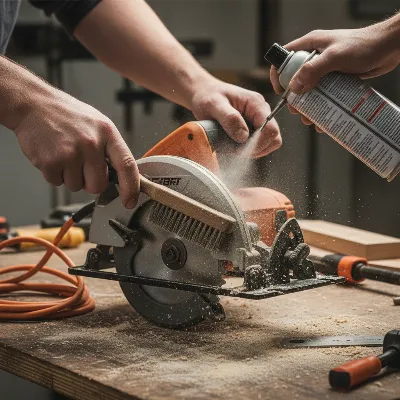 A close-up of a DIY enthusiast cleaning a circular saw blade and dust port after use, with a brush and compressed air.
Reputable Circular Saw Brands and Their Maintenance Considerations
Many DIYers choose established brands like Bosch, Makita, DeWalt, Milwaukee, and Ryobi for their reliability and durability. These brands, with proper care, can last for many years.
Bosch is known for precision and ergonomic design. Makita offers powerful motors and extensive cordless battery systems. DeWalt is favored by professionals for its ruggedness. Milwaukee is celebrated for innovative battery technology and heavy-duty performance. Ryobi provides excellent value for home DIYers.
A key advantage of reputable brands is the availability of spare parts and authorized service centers, simplifying maintenance. While each brand has design quirks, fundamental maintenance principles—cleaning, blade care, motor inspection, and safe storage—remain universally critical. Investing in a quality tool from a trusted brand, coupled with diligent maintenance, maximizes its working life.
Key Factors for Circular Saw Longevity: A Comparative Look
Choosing a circular saw involves more than just motor power; design and component choices directly impact longevity and ease of maintenance. Understanding these factors guides your purchase towards a saw that will serve your DIY needs for years.
| Feature / Factor | Benefit for Longevity/Maintenance | Considerations for DIYers |
|---|---|---|
| Motor Type | Brushless motors (modern cordless saws) offer less friction, cooler operation, and significantly longer lifespans. Brushed motors require periodic carbon brush replacement. | Brushless is preferred for heavy use; brushed is more affordable but requires more attention to brush wear. |
| Housing & Base Plate | Durable, impact-resistant housing (e.g., magnesium or heavy-gauge aluminum) protects internal components. Sturdy base plates maintain cutting accuracy. | Seek robust materials that resist bending or cracking, especially if the saw will see active use or potential drops. |
| Dust Collection System | Efficient dust ports and collection bags prevent sawdust from accumulating internally, reducing motor strain and potential overheating. | Good dust collection keeps the motor cleaner, reducing maintenance frequency and extending component life. |
| Blade Change Mechanism | Tool-less or single-wrench blade changes simplify the process, encouraging more frequent blade inspection and replacement when dull. | An easy blade change system makes routine maintenance less cumbersome, improving safety and cutting efficiency. |
| Gearing & Bearings | High-quality gears and sealed bearings reduce friction and wear, ensuring smooth operation and quieter performance over time. | While often internal, good brand reputation usually indicates quality internal components that require less maintenance. |
| Cord/Battery Quality | Heavy-duty cords resist damage (for corded models). High-capacity, well-managed batteries (for cordless) retain charge cycles longer. | Inspect cord durability. For cordless, research battery life and management systems. |
These factors, when considered during purchase, contribute significantly to a circular saw’s overall durability and how much maintenance it will demand. A saw with well-designed features often means less frequent, simpler maintenance tasks for the DIYer.
The Essential Circular Saw Maintenance Guide
To ensure your circular saw remains a powerful and precise tool for all your DIY endeavors, consistent and thorough maintenance is non-negotiable.
Assessing Your Needs for Durable Performance
|
Our Picks for the Best Circular Saw in 2026
As an Amazon Associate I earn from qualifying purchases.
|
||
| Num | Product | Action |
|---|---|---|
| 1 | Mini Circular Saw, 4Amp 3500RPM Corded Compact Saw with 4-1/2" 24T TCT Blades, Laser Guide, Rip Guide, Vacuum Adapter and Blade Wrench, Max Cutting Depth 1-11/16"(90°), 1-1/8"(45°) |

|
| 2 | Ryobi 14 Amp 7-1/4" Adjustable Electric Circular Saw w/Exactline Laser | CSB135L |
|
| 3 | RIDGID 18V SUBCOMPACT BRUSHLESS Cordless 6-1/2 in. Circular Saw Tool ONLY R8656B |
|
| 4 | Makita 5477NB 7-1/4" Hypoid Saw |
|
| 5 | Makita 5377MG 7-1/4" Magnesium Hypoid Saw |
|
| 6 | Ridgid ZRR32104 THRUCOOL 7-1/4 in. Worm Drive Saw (Renewed) |
|
| 7 | RIDGID 18V Cordless 6 1/2 in. Circular Saw (Tool Only) |
|
| 8 | Cordless Circular Saw 6-1/2" for Makita 18V Battery (Not Inclued), 4500RPM Power Circular Saws w/Laser Guide, 0-45° Bevel Capability, Max 2-3/16" Depth, Electric Saw for Wood Plastic |
|
| 9 | RYOBI Circular Saw CSB125 13-Amp 7-1/4 in. Electric (Renewed) |
|
| 10 | Seesii Mini Circular Saw with Laser Guide,4.8A 4000 RPM Compact Corded Circular Saw with Rip Guide,3 Blades (4-1/2") for Wood,Soft Metal,Tile,Plastic Cutting,Max Cut Depth 1-11/16"(90°),1-1/8" (45°) |
|
Before maintenance, consider your typical usage. Frequent, heavy-duty use on dense hardwoods requires more regular and in-depth maintenance than occasional softwood cuts. Tailoring your maintenance schedule to your workload ensures the tool receives appropriate attention.
Key Maintenance Practices
- Cleaning is Paramount: After every use, disconnect power and use a stiff brush or compressed air to remove sawdust from the blade, guard, motor vents, and base plate. Sawdust accumulation causes overheating and impedes guard movement.
- Blade Inspection and Care: Regularly check your blade for dullness, missing teeth, cracks, or resin buildup. A dull blade strains the motor and produces poor cuts. Replace dull or damaged blades promptly and clean resin with a specialized blade cleaner.
- Lubrication: Apply a dry lubricant or silicone spray to moving parts like the blade guard pivot and adjustment mechanisms to ensure smooth operation and prevent rust. Avoid over-lubricating, which can attract dust.
- Carbon Brush Check (for brushed motors): For brushed motors, check carbon brushes periodically (e.g., every 50-100 hours of use). Worn brushes cause intermittent power or motor failure. Replace both brushes simultaneously if one is significantly worn.
- Cord and Battery Inspection: For corded saws, inspect the power cord for cuts or kinks. For cordless saws, examine the battery pack for damage and clean terminals. Proper battery charging and storage are also critical.
 A DIYer inspecting a circular saw blade for wear and dullness, using a small ruler to check tooth condition.
Budgeting for Longevity
Consider quality accessories as part of your maintenance budget. Investing in high-quality blades that stay sharp longer and specialized cleaning solutions can save money by reducing saw wear and extending consumable life.
Where to Source Parts and Supplies
Always refer to your saw’s manual for specific part numbers and recommended cleaning agents. Purchase replacement parts, especially critical components like blades and carbon brushes, from authorized dealers or reputable suppliers to ensure compatibility and quality.
Pre-Use Check-up
Before every use, perform a quick visual inspection:
- Is the blade securely fastened?
- Are the guards moving freely?
- Is the cord (or battery) in good condition?
- Is the base plate clean and free of obstructions?
This brief check prevents accidents and ensures your saw is ready for the task.
Safe Operation and Maintenance of Your Circular Saw
Safety is paramount when operating and maintaining any power tool. Always wear appropriate personal protective equipment (PPE), including safety glasses, hearing protection, and gloves. Avoid loose clothing or jewelry. Before any maintenance, always disconnect the saw from its power source by unplugging corded saws or removing the battery from cordless models. This prevents accidental startups.
When changing blades, ensure the saw is stable and secure. Use the manufacturer-provided blade wrench and engage the spindle lock correctly. Never force a blade onto the arbor. Keep the blade guard down as much as possible, even when changing blades, to minimize exposed teeth.
For cleaning, use a brush or compressed air, not bare hands, to remove sawdust. Avoid harsh solvents that could damage plastic components. If lubricating, apply sparingly and wipe away excess to prevent dust accumulation.
Proper storage is vital. Store your circular saw in a dry, clean place, away from extreme temperatures and humidity, which can cause rust and electronic damage. Store it in its original case or a designated area to protect it from impacts and dust. Following these guidelines ensures safety, longevity, and reliability.
Real-World Applications and Maintained Performance
A well-maintained circular saw is a versatile workhorse for DIY projects. For deck building, a sharp blade and smooth base plate ensure clean, straight cuts. For cabinetry, accurate cross-cuts are critical for strong joints; a debris-free saw with functional depth adjustments provides consistent results. Even for crafts, a meticulously maintained saw prevents tear-out and ensures tight angles.
In home renovations, a cared-for circular saw’s power and reliability are indispensable for cutting framing lumber or trimming doors. Without proper maintenance—a dull blade, sticky guard, or dusty motor—the saw struggles, creating rough cuts, overheating, and undermining work quality. Dedicating time to cleaning, inspecting, and lubricating your circular saw guarantees its readiness and capability for every cut, making DIY aspirations a tangible reality.
Conclusion
Regular maintenance is a fundamental practice for any DIYer. By diligently cleaning, inspecting blades, lubricating moving parts, and ensuring safe storage, you extend your circular saw’s operational life, enhance its performance, and improve safety. A well-maintained circular saw cuts more efficiently, accurately, and reliably, making every project smoother and more enjoyable. Embrace these essential tips, and your circular saw will remain a trusted companion in your workshop for countless projects to come.
Frequently Asked Questions
Frequently Asked Questions
How often should I clean my circular saw for optimal performance?
It is best to clean your circular saw after every use, focusing on removing sawdust from the blade, guards, and motor vents. A more thorough cleaning, including checking carbon brushes and lubricating moving parts, should be performed periodically, typically every 20-50 hours of operation, depending on usage frequency.
What type of lubricant is recommended for circular saw moving parts?
For moving parts like blade guards and adjustment mechanisms, a dry lubricant or silicone spray is generally recommended. These lubricants attract less dust and grime compared to wet oils. Always consult your saw's manual for specific lubrication recommendations to ensure compatibility.
When should carbon brushes be replaced in a brushed motor circular saw?
Carbon brushes in brushed motors should be inspected every 50-100 hours of use, or if you notice decreased power, excessive sparking, or intermittent stopping. Replace them when they are worn down to approximately 1/4 inch of their original length, and always replace both brushes simultaneously for balanced performance.
Is it better to sharpen or replace a dull circular saw blade?
While some high-quality carbide-tipped blades can be professionally sharpened, for most DIY circular saw blades, replacement is often more cost-effective and ensures optimal performance. A dull or damaged blade not only produces poor cuts but also puts unnecessary strain on your saw's motor, potentially shortening its lifespan.
What is the best way to store a circular saw to prevent damage?
Store your circular saw in a dry, climate-controlled environment, ideally in its original case or a dedicated tool bag. This protects it from dust, moisture (which can cause rust), and accidental impacts. Ensure the power cord is neatly wrapped, and any batteries are removed and stored separately according to manufacturer guidelines.
Maintain Your Circular Saw for Longevity
Follow these essential steps to keep your circular saw in peak condition, ensuring safety and extending its operational life for all your DIY projects.
Disconnect the power source. Use a stiff brush or compressed air to remove sawdust and debris from the blade, blade guard, motor vents, and base plate. This prevents overheating and ensures guards move freely.
Regularly check your blade for dullness, missing teeth, cracks, or excessive resin buildup. Replace dull or damaged blades promptly to avoid straining the motor and ensure clean cuts. Clean resin with a specialized blade cleaner.
Apply a dry lubricant or silicone spray sparingly to moving components like the blade guard pivot and adjustment mechanisms. This ensures smooth operation and prevents rust. Avoid over-lubricating, as it can attract more dust.
For saws with brushed motors, inspect carbon brushes every 50-100 hours of use. Replace both brushes simultaneously if they are worn down to about 1/4 inch of their original length to prevent intermittent power or motor failure.
For corded saws, thoroughly inspect the power cord for any cuts, abrasions, or kinks. For cordless saws, examine the battery pack for physical damage and ensure terminals are clean. Proper battery charging and storage are also critical for longevity.

I’ve been using circular saws for years, and this guide really hit home with the importance of regular cleaning. My old saw was getting sluggish, and after following the tips here, especially about clearing out sawdust from the motor vents, it’s running like new. Definitely extended the life of my corded model, which I appreciate since it’s a workhorse for my bigger projects.
The tips on maintaining the saw were helpful, especially for someone like me who mostly does DIY projects. However, I wish there was a bit more detail on specific lubricants to use for different parts of the saw. It mentioned lubricating moving parts, but a brand recommendation or type would have been useful. Still, good reminder about keeping it clean.
Great advice on blade inspection! I used to just swap blades when they were obviously dull, but checking for bent teeth and proper sharpening has made a huge difference in my cut quality. My cuts are much cleaner now, even on thicker materials. It’s a simple step that I often overlooked, but it really does improve performance and safety.
This guide is fantastic for anyone wanting to keep their circular saw in top shape. I’ve always been a bit intimidated by power tool maintenance, but the breakdown of essential steps made it easy to understand. My cordless saw now feels much safer and more reliable for all my outdoor woodworking tasks. Thanks for the clear, actionable advice!