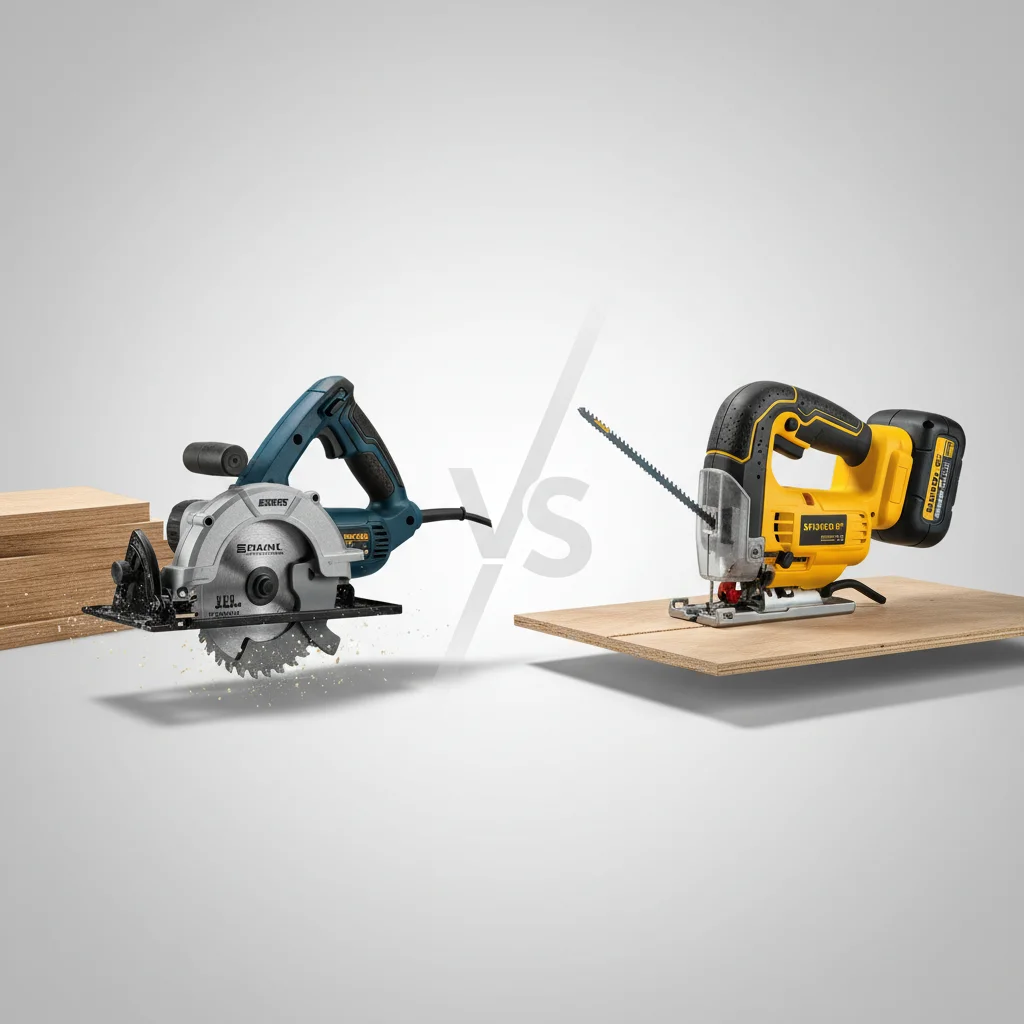
Deciding between a circular saw and a jigsaw depends entirely on the type of cut and material you’re working with. While both are essential power tools for many DIYers and professionals, they excel in different areas. A circular saw is ideal for long, straight, and precise cuts through thicker materials like plywood, dimensional lumber, and even some metals, offering superior speed and power. In contrast, a jigsaw is the go-to tool for intricate curves, detailed shapes, and internal cuts in thinner materials such as wood, plastic, and thin sheet metal, providing greater maneuverability and control for non-linear tasks.
Understanding the Circular Saw’s Strengths
The circular saw is a powerhouse designed for efficiency and accuracy in straight-line cutting. Its robust motor and large, rotating blade make quick work of demanding tasks. Whether you’re framing a wall, cutting large sheets of material for cabinetry, or breaking down lumber, the circular saw delivers consistent, clean edges. It’s particularly effective for cross-cutting and ripping wood, and with the right blade, it can also tackle masonry and metal. The depth and bevel adjustments allow for versatile cutting angles, making it indispensable for construction and woodworking projects that require precise, repeatable straight cuts. For circular saw buying guides on this site.
When to Choose a Jigsaw
For projects demanding curves, intricate patterns, or internal cutouts, the jigsaw is the undisputed champion. Its narrow, reciprocating blade allows it to navigate tight turns and create shapes that a circular saw simply cannot. From cutting decorative elements in furniture to creating openings for sinks or outlets, the jigsaw offers unparalleled flexibility. It’s also excellent for starting cuts in the middle of a workpiece, a task impossible for a circular saw without pre-drilling. While not as powerful or fast for straight cuts as a circular saw, its precision in detailed work makes it an invaluable tool for crafts, trim work, and custom fabrication.
Key Differences in Performance and Application
|
Our Picks for the Best Circular Saw in 2026
As an Amazon Associate I earn from qualifying purchases.
|
||
| Num | Product | Action |
|---|---|---|
| 1 | RYOBI Circular Saw CSB125 13-Amp 7-1/4 in. Electric (Renewed) |

|
| 2 | Ridgid ZRR32104 THRUCOOL 7-1/4 in. Worm Drive Saw (Renewed) |
|
| 3 | Makita 5477NB 7-1/4" Hypoid Saw |
|
| 4 | Makita 5377MG 7-1/4" Magnesium Hypoid Saw |
|
| 5 | Seesii Mini Circular Saw with Laser Guide,4.8A 4000 RPM Compact Corded Circular Saw with Rip Guide,3 Blades (4-1/2") for Wood,Soft Metal,Tile,Plastic Cutting,Max Cut Depth 1-11/16"(90°),1-1/8" (45°) |
|
| 6 | Cordless Circular Saw 6-1/2" for Makita 18V Battery (Not Inclued), 4500RPM Power Circular Saws w/Laser Guide, 0-45° Bevel Capability, Max 2-3/16" Depth, Electric Saw for Wood Plastic |
|
| 7 | RIDGID 18V SUBCOMPACT BRUSHLESS Cordless 6-1/2 in. Circular Saw Tool ONLY R8656B |
|
| 8 | Mini Circular Saw, 4Amp 3500RPM Corded Compact Saw with 4-1/2" 24T TCT Blades, Laser Guide, Rip Guide, Vacuum Adapter and Blade Wrench, Max Cutting Depth 1-11/16"(90°), 1-1/8"(45°) |
|
| 9 | RIDGID 18V Cordless 6 1/2 in. Circular Saw (Tool Only) |
|
| 10 | Ryobi 14 Amp 7-1/4" Adjustable Electric Circular Saw w/Exactline Laser | CSB135L |
|
The fundamental difference lies in their cutting motion and intended use. A circular saw uses a rotational motion to power through material, prioritizing speed and straightness. A jigsaw, on the other hand, employs an up-and-down reciprocating motion, allowing for intricate turns and internal cuts. This distinction dictates their optimal applications. For instance, cutting a 4×8 sheet of plywood in half is a job for a circular saw, completed in mere seconds with a clean, straight line. Cutting a curved tabletop edge or a custom design into a piece of wood, however, is a task perfectly suited for a jigsaw, where precision and maneuverability trump raw power.
- Circular saws excel at long, straight, and fast cuts.
- Jigsaws are superior for curves, intricate shapes, and internal cuts.
- Circular saws handle thicker, denser materials with ease.
- Jigsaws offer greater control for detailed and non-linear work.
- Blade types vary significantly, impacting material compatibility.
Material Compatibility and Blade Selection
Both tools offer a range of blades designed for different materials, but their primary applications differ. Circular saw blades are typically larger and more rigid, with various tooth counts and configurations for wood, metal, masonry, and plastics. High tooth count blades provide smoother cuts, while lower tooth counts are faster for rougher work. Jigsaw blades are much smaller and more flexible, available in specific designs for wood, metal, ceramic, and even laminates. The choice of blade is crucial for achieving the best results and preventing damage to both the material and the tool. Always match the blade to the material and the desired cut quality.
Ultimately, the decision between a circular saw and a jigsaw isn’t about which one is ‘better,’ but rather which one is ‘right’ for the specific task at hand. Many workshops benefit from having both, as they complement each other perfectly, covering a wide spectrum of cutting needs. For heavy-duty, straight-line work, reach for your circular saw. For detailed, curved, or internal cuts, the jigsaw is your ideal companion. Consider your most frequent projects and invest accordingly to ensure you have the right tool for every job.For those looking for a versatile circular saw, consider models with adjustable depth and bevel settings.If intricate cuts are your priority, look for jigsaws with orbital action and variable speed control for enhanced precision.
