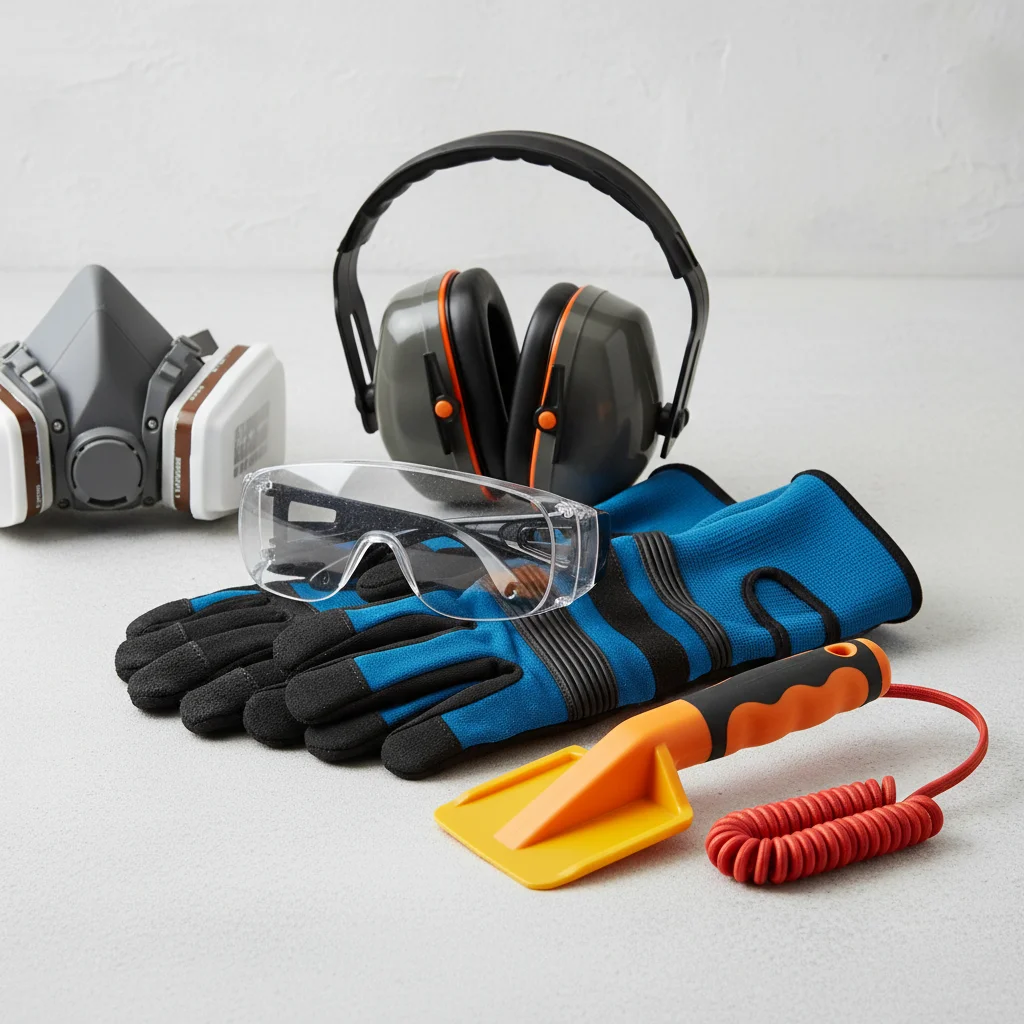
Ensuring circular saw safety is paramount for any DIY enthusiast, and the right gear can significantly reduce risks. There are five essential pieces of safety equipment every circular saw user should own to protect themselves from common hazards like flying debris, loud noise, and potential kickback.
Why Safety Gear is Non-Negotiable
Working with a circular saw involves inherent risks. Blades spin at high speeds, creating sawdust, wood chips, and the potential for serious injury if proper precautions aren’t taken. Investing in quality safety gear isn’t an option; it’s a necessity that protects your eyes, ears, hands, and even your respiratory system. Many accidents are preventable with the correct protective equipment. For compare top circular saw on this site.
Eye Protection: Guarding Your Vision
The most immediate danger when operating a circular saw is flying debris. Wood chips, sawdust, and even small pieces of material can be ejected at high speeds, posing a severe threat to your eyes. Safety glasses or goggles are non-negotiable. Look for eyewear that meets ANSI Z87.1 standards, ensuring impact resistance and side protection. Clear lenses are suitable for most indoor work, while tinted or polarized options can be beneficial for outdoor projects to reduce glare.
Hearing Protection: Preserving Your Ears
Circular saws are loud, often exceeding safe noise levels for prolonged exposure. Continuous exposure to noise above 85 decibels can lead to permanent hearing damage. Earmuffs or earplugs are crucial for protecting your hearing. Earmuffs offer excellent noise reduction and are easy to put on and take off, while earplugs are discreet and comfortable for extended use. Choose a product with a high Noise Reduction Rating (NRR) to ensure adequate protection.
- Safety Glasses (ANSI Z87.1 rated)
- Hearing Protection (Earmuffs or Earplugs with high NRR)
- Work Gloves (for grip and minor protection)
- Dust Mask or Respirator (N95 or better)
- Appropriate Work Attire (no loose clothing)
Hand Protection: The Role of Work Gloves
|
Our Picks for the Best Circular Saw in 2026
As an Amazon Associate I earn from qualifying purchases.
|
||
| Num | Product | Action |
|---|---|---|
| 1 | Makita 5477NB 7-1/4" Hypoid Saw |

|
| 2 | Cordless Circular Saw 6-1/2" for Makita 18V Battery (Not Inclued), 4500RPM Power Circular Saws w/Laser Guide, 0-45° Bevel Capability, Max 2-3/16" Depth, Electric Saw for Wood Plastic |
|
| 3 | Makita 5377MG 7-1/4" Magnesium Hypoid Saw |
|
| 4 | Seesii Mini Circular Saw with Laser Guide,4.8A 4000 RPM Compact Corded Circular Saw with Rip Guide,3 Blades (4-1/2") for Wood,Soft Metal,Tile,Plastic Cutting,Max Cut Depth 1-11/16"(90°),1-1/8" (45°) |
|
| 5 | Mini Circular Saw, 4Amp 3500RPM Corded Compact Saw with 4-1/2" 24T TCT Blades, Laser Guide, Rip Guide, Vacuum Adapter and Blade Wrench, Max Cutting Depth 1-11/16"(90°), 1-1/8"(45°) |
|
| 6 | RIDGID 18V Cordless 6 1/2 in. Circular Saw (Tool Only) |
|
| 7 | RYOBI Circular Saw CSB125 13-Amp 7-1/4 in. Electric (Renewed) |
|
| 8 | RIDGID 18V SUBCOMPACT BRUSHLESS Cordless 6-1/2 in. Circular Saw Tool ONLY R8656B |
|
| 9 | Ridgid ZRR32104 THRUCOOL 7-1/4 in. Worm Drive Saw (Renewed) |
|
| 10 | Ryobi 14 Amp 7-1/4" Adjustable Electric Circular Saw w/Exactline Laser | CSB135L |
|
While gloves won’t stop a spinning blade, they offer crucial protection against splinters, rough edges, and provide a better grip on your material and the saw itself. Choose gloves that are durable but still allow for dexterity. Avoid overly bulky gloves that could snag on the saw or material. Leather or synthetic work gloves with reinforced palms are ideal for most circular saw applications.
Respiratory Protection: Breathing Clean Air
Sawdust, especially from certain types of wood or engineered materials, can be a significant respiratory irritant and a long-term health hazard. A simple dust mask (N95 or higher) is essential for filtering out fine particles and protecting your lungs. For extensive projects or when working with hazardous materials, a respirator with appropriate filters might be necessary. Always ensure a tight seal around your nose and mouth for effective filtration.
Proper Attire and Work Environment
Beyond personal protective equipment, your clothing and workspace also play a role in safety. Avoid loose-fitting clothing, jewelry, or long hair that could get caught in the saw. Ensure your work area is well-lit, clear of clutter, and that your material is securely clamped. A stable work surface is just as important as your personal gear. Always read your saw’s manual before operation and understand its specific safety features.

I’ve been doing DIY projects for years, and I can’t stress enough how important good eye protection is. The post really hit home about guarding your vision. I had a close call once with a rogue wood chip, and ever since, I never skimp on quality safety glasses. These tips are spot on for anyone using a circular saw.
While the advice on essential safety equipment is solid, I wish there was a bit more detail on specific brands for respiratory protection. It’s hard to know which dust masks actually filter out the fine sawdust effectively. I’ve tried a few, and some just don’t cut it for prolonged use. Still, a good overview for beginners.
Great reminder about the necessity of safety gear. I always wear my gloves and eye protection, but I sometimes forget about ear protection when I’m just making a quick cut. The mention of loud noise as a common hazard definitely made me rethink that habit. It’s easy to get complacent, so this was a good wake-up call.
This was super helpful! I’m just starting out with more serious woodworking projects and the idea of kickback always makes me nervous. Knowing that the right gear can help mitigate some of those risks, especially for my hands, gives me more confidence. Definitely going to invest in some better gloves and make sure I’m always covered.