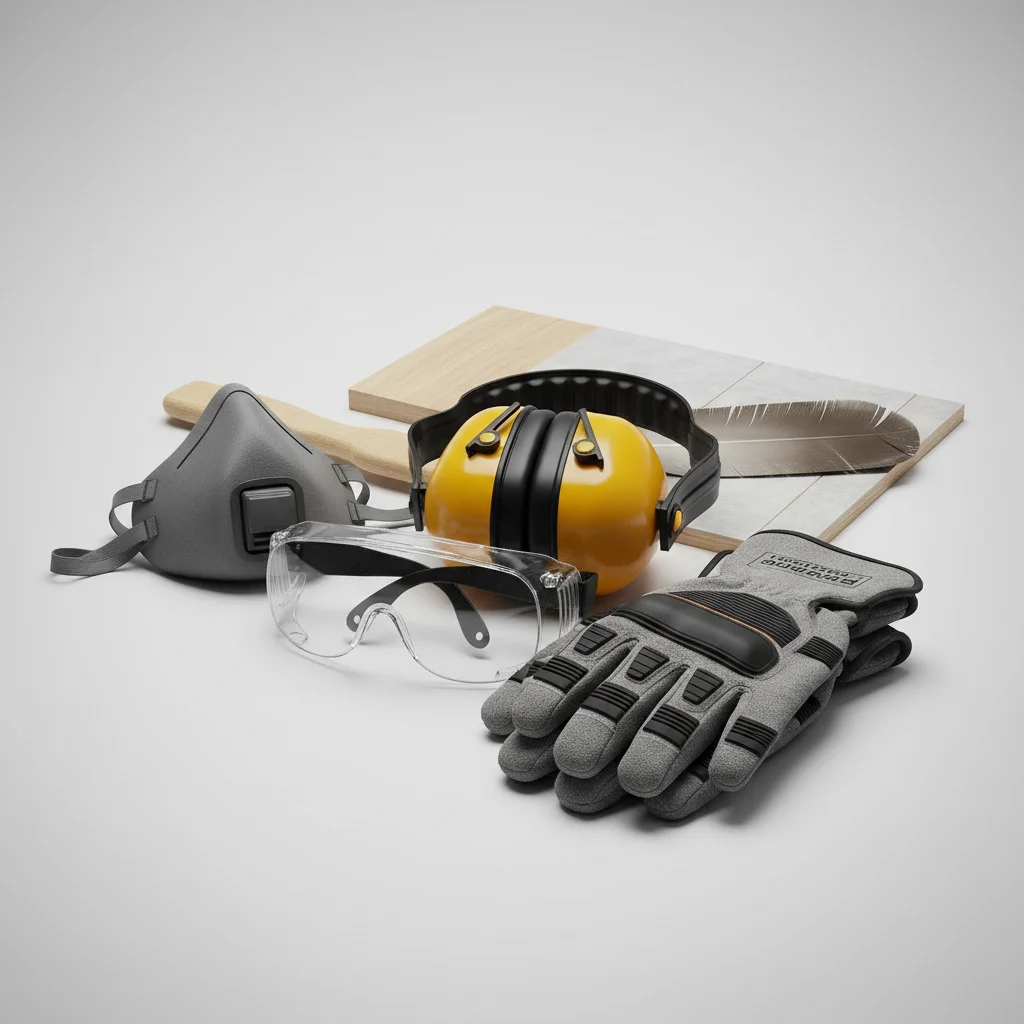
Ensuring your safety when operating a circular saw is paramount, and this involves using specific protective gear. There are five essential pieces of safety equipment every DIYer should have to prevent common injuries like cuts, eye damage, and hearing loss.
Eye Protection: Guarding Against Debris
The most immediate danger when using a circular saw is flying debris. Wood chips, sawdust, and even small pieces of the material being cut can cause serious eye injuries. Always wear safety glasses or goggles that meet ANSI Z87.1 standards. These provide impact resistance and often offer side shields for comprehensive protection. Regular eyeglasses are not sufficient as they do not offer the same level of impact resistance or side protection.
Hand Protection: Preventing Cuts and Splinters
While it might seem counterintuitive to wear gloves when operating power tools, the right type of gloves can significantly enhance safety. Opt for snug-fitting work gloves that offer good grip and cut resistance without being bulky. They protect your hands from splinters, rough edges, and accidental contact with the blade when it’s not in operation. Avoid loose-fitting gloves that could get caught in the saw’s moving parts.
Hearing Protection: Preserving Your Ears
|
Our Picks for the Best Circular Saw in 2026
As an Amazon Associate I earn from qualifying purchases.
|
||
| Num | Product | Action |
|---|---|---|
| 1 | Ridgid ZRR32104 THRUCOOL 7-1/4 in. Worm Drive Saw (Renewed) |

|
| 2 | Mini Circular Saw, 4Amp 3500RPM Corded Compact Saw with 4-1/2" 24T TCT Blades, Laser Guide, Rip Guide, Vacuum Adapter and Blade Wrench, Max Cutting Depth 1-11/16"(90°), 1-1/8"(45°) |
|
| 3 | RIDGID 18V Cordless 6 1/2 in. Circular Saw (Tool Only) |
|
| 4 | Cordless Circular Saw 6-1/2" for Makita 18V Battery (Not Inclued), 4500RPM Power Circular Saws w/Laser Guide, 0-45° Bevel Capability, Max 2-3/16" Depth, Electric Saw for Wood Plastic |
|
| 5 | RIDGID 18V SUBCOMPACT BRUSHLESS Cordless 6-1/2 in. Circular Saw Tool ONLY R8656B |
|
| 6 | RYOBI Circular Saw CSB125 13-Amp 7-1/4 in. Electric (Renewed) |
|
| 7 | Ryobi 14 Amp 7-1/4" Adjustable Electric Circular Saw w/Exactline Laser | CSB135L |
|
| 8 | Makita 5377MG 7-1/4" Magnesium Hypoid Saw |
|
| 9 | Makita 5477NB 7-1/4" Hypoid Saw |
|
| 10 | Seesii Mini Circular Saw with Laser Guide,4.8A 4000 RPM Compact Corded Circular Saw with Rip Guide,3 Blades (4-1/2") for Wood,Soft Metal,Tile,Plastic Cutting,Max Cut Depth 1-11/16"(90°),1-1/8" (45°) |
|
Circular saws can produce noise levels well above 100 decibels, which can cause permanent hearing damage over time. Earplugs or earmuffs are crucial for protecting your hearing. Foam earplugs are effective and inexpensive, while earmuffs offer higher noise reduction ratings and are often more comfortable for extended use. Choose a hearing protection device with a Noise Reduction Rating (NRR) of at least 25 dB.
Respiratory Protection: Breathing Clean Air
Cutting wood and other materials generates a significant amount of fine dust, which can be harmful to your respiratory system if inhaled regularly. A dust mask or respirator is essential, especially when working in enclosed spaces. Look for N95 respirators, which filter out at least 95% of airborne particles. For very fine dust or prolonged exposure, a P100 respirator offers even greater protection.
Appropriate Clothing: Avoiding Snags and Entanglement
Your clothing choices also play a role in circular saw safety. Avoid loose-fitting clothes, dangling drawstrings, or jewelry that could get caught in the saw blade or other moving parts. Wear sturdy, close-fitting attire. Closed-toe shoes, preferably work boots, are also important to protect your feet from falling objects or dropped tools.
Additional Safety Considerations
Beyond personal protective equipment, maintaining a clean and well-lit workspace is vital. Ensure your work piece is securely clamped to prevent movement during cutting, which can lead to kickback. Always unplug the saw before making any adjustments or changing blades. Familiarize yourself with your saw’s specific safety features and always follow the manufacturer’s instructions.
- Always wear ANSI Z87.1 rated safety glasses.
- Use snug-fitting, cut-resistant work gloves.
- Protect your hearing with earplugs or earmuffs (NRR 25+ dB).
- Wear an N95 or P100 respirator for dust protection.
- Dress in close-fitting clothing and sturdy, closed-toe shoes.
