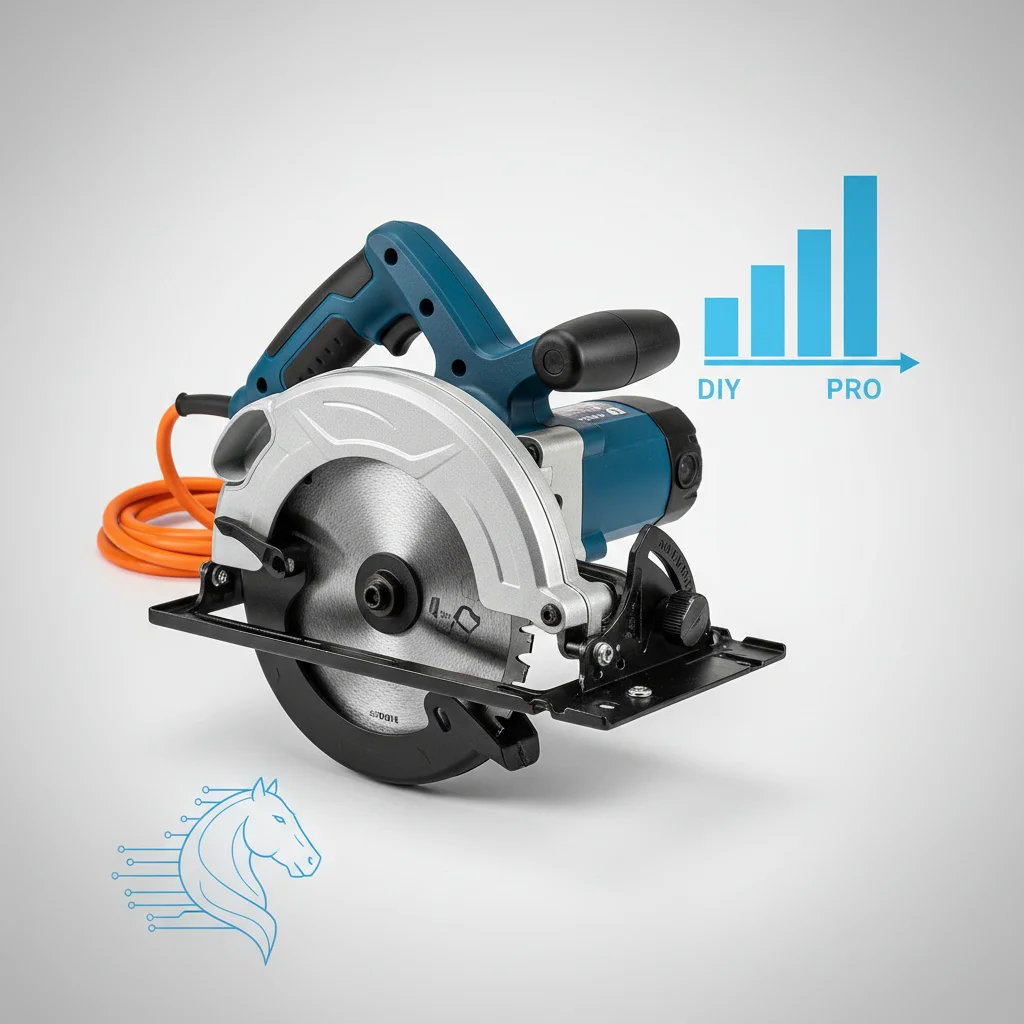
Understanding circular saw horsepower is crucial for selecting the right tool for your projects. While direct horsepower ratings are less common for electric saws, which typically use amps, a good rule of thumb is that a saw with 15 amps or more will provide sufficient power for most demanding tasks, including cutting hardwoods and thick materials. For lighter work, a 10-12 amp saw can be perfectly adequate. This guide will break down what power levels mean for different applications.
Decoding Circular Saw Power: Amps vs. Horsepower
For corded circular saws, power is primarily measured in amps, not horsepower. Amperage indicates the current draw, which directly correlates to the motor’s power output. A higher amperage means a more powerful motor capable of handling tougher materials and sustained use without bogging down. For example, a 15-amp circular saw is generally considered a heavy-duty tool, suitable for professional use and demanding DIY projects. Cordless saws, on the other hand, are rated by battery voltage (e.g., 18V, 20V, 60V) and often by their equivalent amp-hour (Ah) rating, which indicates battery capacity and run time. For circular saw buying guides on this site.
While you won’t typically see a horsepower rating on an electric circular saw, you can make an approximate conversion. Roughly, 1 amp at 120 volts (standard household current) is equivalent to about 0.16 horsepower. So, a 15-amp saw would be approximately 2.4 horsepower. This conversion is more for conceptual understanding than practical selection, as amperage is the standard metric to look for.
Power Requirements for Common Materials
The type of material you plan to cut is the biggest determinant of the power you’ll need. Softwoods like pine and fir require less power, making 10-12 amp saws suitable. For hardwoods such as oak, maple, or dense engineered wood products like plywood and MDF, a 13-15 amp saw is highly recommended to prevent stalling and ensure clean cuts. Cutting masonry or metal with specialized blades will also demand higher power, typically in the 15-amp range, to maintain blade speed and prevent motor strain.
- Softwoods (Pine, Fir): 10-12 Amps
- Hardwoods (Oak, Maple): 13-15 Amps
- Plywood, MDF, OSB: 13-15 Amps
- Pressure-Treated Lumber: 14-15 Amps
- Metal (with appropriate blade): 15 Amps or higher
Choosing the Right Power for Your Projects
|
Our Picks for the Best Circular Saw in 2026
As an Amazon Associate I earn from qualifying purchases.
|
||
| Num | Product | Action |
|---|---|---|
| 1 | Ridgid ZRR32104 THRUCOOL 7-1/4 in. Worm Drive Saw (Renewed) |

|
| 2 | Ryobi 14 Amp 7-1/4" Adjustable Electric Circular Saw w/Exactline Laser | CSB135L |
|
| 3 | Mini Circular Saw, 4Amp 3500RPM Corded Compact Saw with 4-1/2" 24T TCT Blades, Laser Guide, Rip Guide, Vacuum Adapter and Blade Wrench, Max Cutting Depth 1-11/16"(90°), 1-1/8"(45°) |
|
| 4 | RIDGID 18V SUBCOMPACT BRUSHLESS Cordless 6-1/2 in. Circular Saw Tool ONLY R8656B |
|
| 5 | Cordless Circular Saw 6-1/2" for Makita 18V Battery (Not Inclued), 4500RPM Power Circular Saws w/Laser Guide, 0-45° Bevel Capability, Max 2-3/16" Depth, Electric Saw for Wood Plastic |
|
| 6 | Seesii Mini Circular Saw with Laser Guide,4.8A 4000 RPM Compact Corded Circular Saw with Rip Guide,3 Blades (4-1/2") for Wood,Soft Metal,Tile,Plastic Cutting,Max Cut Depth 1-11/16"(90°),1-1/8" (45°) |
|
| 7 | Makita 5377MG 7-1/4" Magnesium Hypoid Saw |
|
| 8 | Makita 5477NB 7-1/4" Hypoid Saw |
|
| 9 | RIDGID 18V Cordless 6 1/2 in. Circular Saw (Tool Only) |
|
| 10 | RYOBI Circular Saw CSB125 13-Amp 7-1/4 in. Electric (Renewed) |
|
When selecting a circular saw, consider the most demanding tasks you anticipate. If you’re primarily doing light framing, cutting 2x4s, or occasional plywood work, a 12-amp saw might suffice. However, if you’re tackling extensive deck building, cutting thick hardwoods, or working on construction sites, investing in a 15-amp saw is a wise decision. These higher-powered saws offer greater torque, reducing the chance of kickback and providing a smoother, more consistent cutting experience. They also tend to have more durable motors designed for continuous use.
For cordless options, look for higher voltage (e.g., 20V or 60V) and higher amp-hour batteries (4.0Ah or more) for extended run time and power comparable to corded models. Many modern brushless cordless saws can rival the performance of their corded counterparts for many applications.
Impact of Blade Selection on Perceived Power
It’s important to note that even with a powerful motor, the wrong blade can make a saw feel underpowered. A dull blade, a blade with too many teeth for the material, or one not designed for the specific cut (e.g., using a crosscut blade for ripping) will increase resistance and strain the motor. Always match your blade to the material and type of cut for optimal performance. A sharp, appropriate blade allows the saw to work efficiently, making the most of its available power.
Maintenance and Longevity
Proper maintenance also plays a role in how effectively your circular saw utilizes its power. Keeping the motor vents clear of sawdust, ensuring the blade is sharp and clean, and regularly checking the brushes (on brushed motors) will help maintain peak performance and extend the life of your tool. A well-maintained saw will consistently deliver its rated power, preventing premature wear and tear on the motor.

This guide was super helpful in deciding on my next circular saw. I mostly do lighter DIY projects around the house, so knowing that a 10-12 amp saw would be perfectly adequate saved me from overspending on a heavy-duty model I don’t really need. It’s great to have that clarity on what power level means for different applications.
I always wondered about the horsepower thing, but the explanation about amps for electric saws really cleared it up. My old 10-amp saw was fine for plywood, but trying to rip through some oak for a workbench was a nightmare. Upgraded to a 15-amp model after reading this and it’s a night and day difference. No more bogging down, even on dense hardwoods.
Finally, someone explains circular saw power in a way that makes sense! I’ve been struggling with my current saw when cutting thicker materials, and now I understand why. The tip about 15 amps or more for demanding tasks is exactly what I needed to hear. Time to upgrade and stop fighting with my projects.
Good info overall, especially the part about amperage being the key for corded saws. I was hoping for a bit more detail on cordless saw power equivalents, as that’s what I’m leaning towards. My 15-amp corded saw is a beast, but the convenience of cordless is tempting. Still, it’s a solid breakdown for anyone confused about power ratings.