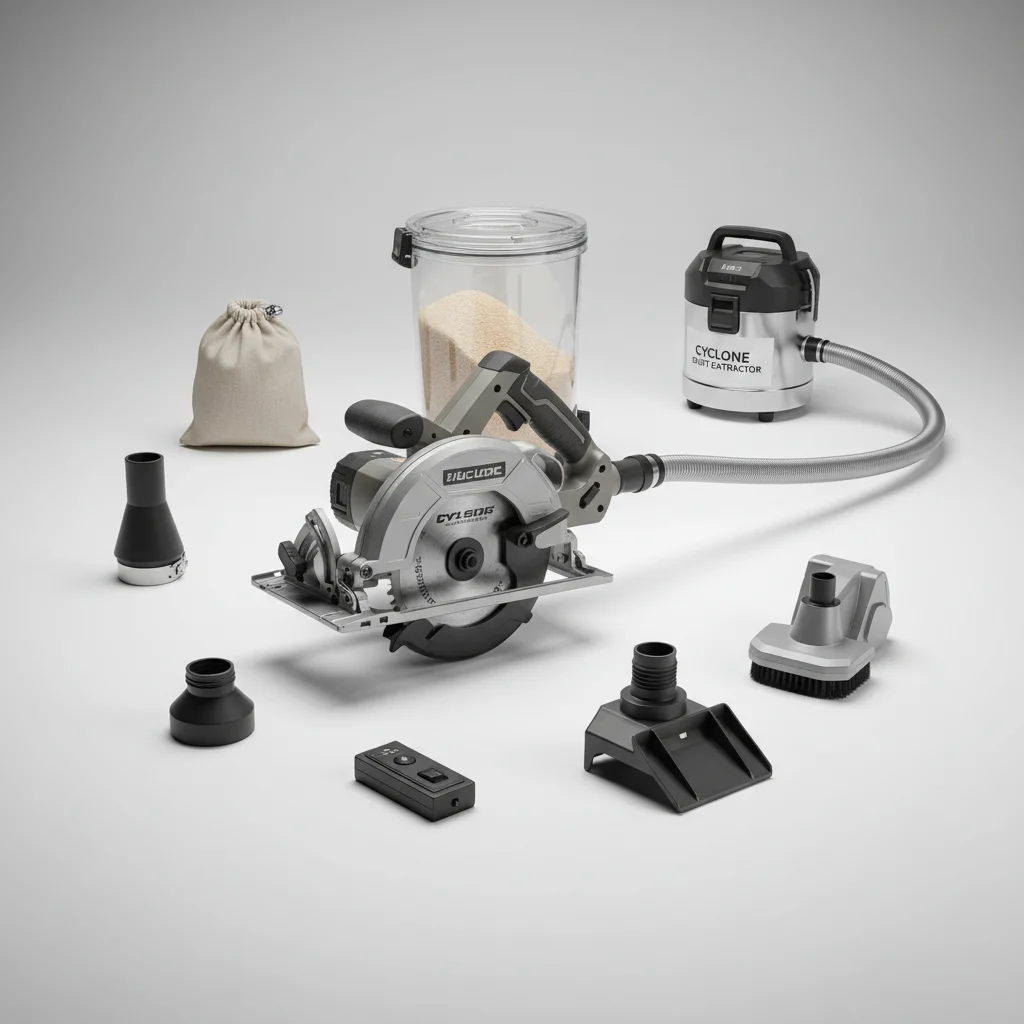
Effective circular saw dust collection is crucial for maintaining a clean and safe workshop environment. There are five primary methods to manage sawdust: using a dust port with a shop vac, employing a dust bag, setting up a dedicated dust extractor, utilizing a dust shroud, or implementing a full workshop air filtration system. Each method offers varying levels of efficiency and convenience, catering to different project needs and workshop setups.
Why Good Dust Collection Matters
Sawdust, especially from circular saws, can quickly accumulate, creating a messy workspace and posing health risks. Fine wood dust can irritate respiratory systems and, in some cases, be a fire hazard. Proper dust collection not only keeps your shop tidy but also improves air quality, making for a healthier and more pleasant working environment. It also helps maintain the longevity of your tools by preventing dust from clogging internal components.
Integrated Dust Ports and Shop Vacs
Many modern circular saws come equipped with a dust port designed to connect directly to a shop vacuum. This is one of the most effective and common methods for immediate dust capture at the source. When choosing a shop vac, look for models with strong suction and a good filtration system, such as HEPA filters, to capture even the finest particles. Ensure the hose diameter matches your saw’s dust port for an airtight connection. This setup is particularly effective for larger projects where significant dust is generated.
Dust Bags for Portability
For users who prioritize portability or work in areas without immediate access to a shop vac, a dust bag can be a convenient solution. These bags attach directly to the saw’s dust port and collect a portion of the sawdust. While not as efficient as a shop vac, they significantly reduce the amount of airborne dust compared to operating a saw without any collection system. Dust bags are ideal for quick cuts, small projects, or when working on a job site where a full dust extraction system isn’t practical. Remember to empty them frequently to maintain their effectiveness.
Dedicated Dust Extractors and Shrouds
|
Our Picks for the Best Circular Saw in 2026
As an Amazon Associate I earn from qualifying purchases.
|
||
| Num | Product | Action |
|---|---|---|
| 1 | RIDGID 18V Cordless 6 1/2 in. Circular Saw (Tool Only) |

|
| 2 | Makita 5477NB 7-1/4" Hypoid Saw |
|
| 3 | RIDGID 18V SUBCOMPACT BRUSHLESS Cordless 6-1/2 in. Circular Saw Tool ONLY R8656B |
|
| 4 | Ryobi 14 Amp 7-1/4" Adjustable Electric Circular Saw w/Exactline Laser | CSB135L |
|
| 5 | Makita 5377MG 7-1/4" Magnesium Hypoid Saw |
|
| 6 | Seesii Mini Circular Saw with Laser Guide,4.8A 4000 RPM Compact Corded Circular Saw with Rip Guide,3 Blades (4-1/2") for Wood,Soft Metal,Tile,Plastic Cutting,Max Cut Depth 1-11/16"(90°),1-1/8" (45°) |
|
| 7 | Cordless Circular Saw 6-1/2" for Makita 18V Battery (Not Inclued), 4500RPM Power Circular Saws w/Laser Guide, 0-45° Bevel Capability, Max 2-3/16" Depth, Electric Saw for Wood Plastic |
|
| 8 | Mini Circular Saw, 4Amp 3500RPM Corded Compact Saw with 4-1/2" 24T TCT Blades, Laser Guide, Rip Guide, Vacuum Adapter and Blade Wrench, Max Cutting Depth 1-11/16"(90°), 1-1/8"(45°) |
|
| 9 | RYOBI Circular Saw CSB125 13-Amp 7-1/4 in. Electric (Renewed) |
|
| 10 | Ridgid ZRR32104 THRUCOOL 7-1/4 in. Worm Drive Saw (Renewed) |
|
For serious DIYers and professionals, a dedicated dust extractor offers superior performance compared to a standard shop vac. These units are designed specifically for fine dust, often featuring self-cleaning filters and higher airflow. Combining a dust extractor with a specialized dust shroud that encases the saw blade can dramatically improve collection rates, capturing nearly all dust at the point of cut. Shrouds are particularly beneficial for tasks that generate a lot of fine dust, like cutting MDF or particleboard.
- Connect dust port to a high-CFM shop vac.
- Regularly empty dust bags for optimal performance.
- Invest in a HEPA-filtered dust extractor for fine particles.
- Utilize blade shrouds for maximum dust capture.
- Ensure proper ventilation in your workspace.
Workshop Air Filtration Systems
Even with excellent source collection, some fine dust will inevitably escape into the air. A workshop air filtration system helps to capture these ambient particles, circulating and cleaning the air in your entire workspace. These units typically hang from the ceiling and draw in dusty air, filter it, and return clean air. While not a primary dust collection method for the saw itself, an air filtration system is an excellent secondary measure to maintain overall air quality, especially in enclosed workshops where dust can linger for hours after cutting.
Maintaining Your Dust Collection System
Regardless of the method you choose, regular maintenance is key to effective dust collection. This includes emptying dust bags and shop vac canisters, cleaning or replacing filters, and checking hoses for clogs or leaks. A well-maintained system will not only perform better but also last longer, ensuring your workshop remains a clean and safe environment for all your circular saw projects.
