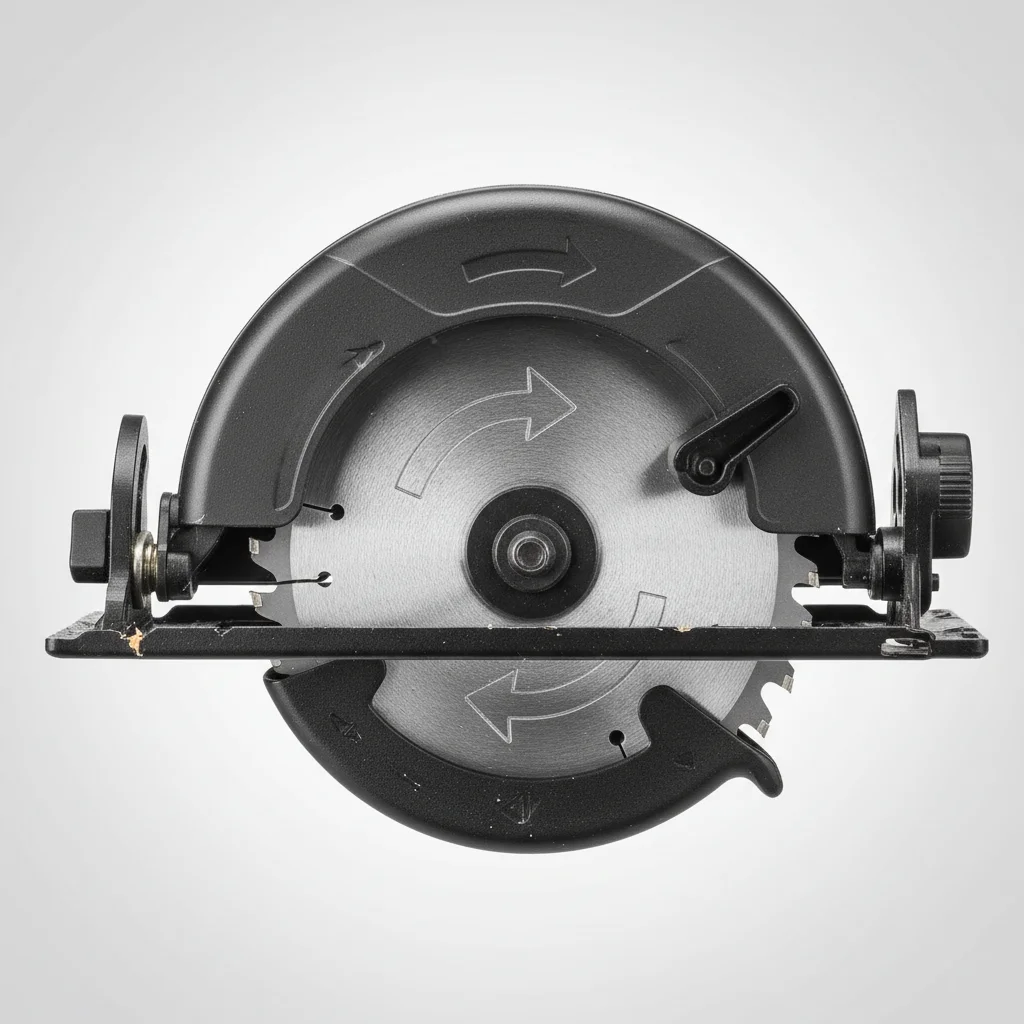
Understanding the correct circular saw blade direction is crucial for both safety and achieving clean, efficient cuts. The blade should always rotate so that the teeth enter the material from the top and exit from the bottom, effectively pulling the saw into the workpiece. This ensures optimal chip ejection and prevents dangerous kickback, which can occur if the blade is mounted incorrectly.
Why Blade Direction Matters for Safety and Performance
The design of a circular saw blade’s teeth is specifically engineered for a particular direction of rotation. When installed correctly, the teeth are angled to slice through the material, creating a smooth cut and efficiently clearing sawdust. Incorrect installation, with the blade spinning backward, can lead to several problems. Firstly, it significantly increases the risk of kickback, where the saw is violently thrown back towards the user. Secondly, it results in extremely rough, splintered cuts and can quickly dull or damage the blade itself. Always double-check the rotation arrow on the blade and the saw before starting any project.
Identifying the Correct Rotation Arrow
Most circular saw blades have an arrow printed directly on the blade’s surface, indicating the intended direction of rotation. Similarly, the saw itself will often have an arrow or a diagram near the blade arbor, showing the correct spin. These arrows should always align. If there’s no arrow on the blade, observe the teeth: the cutting edge of each tooth should be facing towards the front of the saw, ready to engage the material as the blade spins downwards into the wood.
Steps to Ensure Proper Blade Installation
|
Our Picks for the Best Circular Saw in 2026
As an Amazon Associate I earn from qualifying purchases.
|
||
| Num | Product | Action |
|---|---|---|
| 1 | Makita 5377MG 7-1/4" Magnesium Hypoid Saw |

|
| 2 | Makita 5477NB 7-1/4" Hypoid Saw |
|
| 3 | RIDGID 18V SUBCOMPACT BRUSHLESS Cordless 6-1/2 in. Circular Saw Tool ONLY R8656B |
|
| 4 | Seesii Mini Circular Saw with Laser Guide,4.8A 4000 RPM Compact Corded Circular Saw with Rip Guide,3 Blades (4-1/2") for Wood,Soft Metal,Tile,Plastic Cutting,Max Cut Depth 1-11/16"(90°),1-1/8" (45°) |
|
| 5 | Mini Circular Saw, 4Amp 3500RPM Corded Compact Saw with 4-1/2" 24T TCT Blades, Laser Guide, Rip Guide, Vacuum Adapter and Blade Wrench, Max Cutting Depth 1-11/16"(90°), 1-1/8"(45°) |
|
| 6 | Cordless Circular Saw 6-1/2" for Makita 18V Battery (Not Inclued), 4500RPM Power Circular Saws w/Laser Guide, 0-45° Bevel Capability, Max 2-3/16" Depth, Electric Saw for Wood Plastic |
|
| 7 | Ridgid ZRR32104 THRUCOOL 7-1/4 in. Worm Drive Saw (Renewed) |
|
| 8 | RIDGID 18V Cordless 6 1/2 in. Circular Saw (Tool Only) |
|
| 9 | RYOBI Circular Saw CSB125 13-Amp 7-1/4 in. Electric (Renewed) |
|
| 10 | Ryobi 14 Amp 7-1/4" Adjustable Electric Circular Saw w/Exactline Laser | CSB135L |
|
Installing a circular saw blade correctly is a straightforward process that requires attention to detail. First, always disconnect the saw from its power source to prevent accidental startup. Next, locate the arbor nut and use the provided wrench or a standard wrench to loosen it, typically by rotating it in the opposite direction of the blade’s normal spin. Remove the old blade, clean any debris from the arbor and flanges, and then place the new blade onto the arbor, ensuring the rotation arrow matches the saw’s indication. Finally, tighten the arbor nut securely, but do not overtighten, as this can warp the blade.
Common Mistakes and How to Avoid Them
One of the most common mistakes is simply not checking the blade’s rotation arrow during installation. Another is assuming all blades are installed the same way, especially when switching between different saw types or brands. Always take a moment to verify the direction. Additionally, using a dull or damaged blade can mimic some of the symptoms of incorrect rotation, such as burning wood or rough cuts. Regularly inspect your blades for wear and sharpen or replace them as needed. Proper blade selection for the material being cut also plays a significant role in achieving optimal results.
Tips for Maintaining Blade Performance
- Regularly clean your saw blades to remove pitch and resin buildup, which can hinder cutting performance.
- Store blades properly in their original packaging or a dedicated blade case to prevent damage to the teeth.
- Use the correct blade type for the material you are cutting (e.g., crosscut, rip, or combination blades for wood; abrasive blades for metal).
- Never force the saw through material; let the blade do the work, which reduces strain on the motor and the blade.
- Periodically check the arbor and flanges for any signs of wear or damage that could affect blade stability.
By consistently paying attention to circular saw blade direction and following these maintenance tips, you’ll not only extend the life of your blades but also significantly improve the quality and safety of your woodworking projects.

Great info on preventing kickback! I had a scary incident a while back and couldn’t figure out why. Turns out I was probably mounting my blade wrong sometimes. The detail about how the teeth are angled for efficient chip ejection makes a lot of sense now. Definitely a good reminder for anyone, especially new users.
I appreciate the safety tips, especially about the blade pulling the saw into the workpiece. I’m still a bit confused about how to quickly verify the direction on different blades though. A quick visual guide for common blade types would have been super helpful. My cuts are better, but I still double-check way too many times.
I’ve been using circular saws for years, but I never really thought much about the blade direction beyond just making sure it was on. This explanation about the teeth entering from the top and exiting the bottom really clicked for me. My cuts have been noticeably cleaner since I started paying closer attention to this. No more splintering on the top surface!
This was a lifesaver! I was getting really frustrated with rough cuts and excessive sawdust buildup. Realized I was installing my blade backward half the time. The part about optimal chip ejection really highlights why the correct rotation is so important. My workshop is cleaner and my projects look much more professional now.