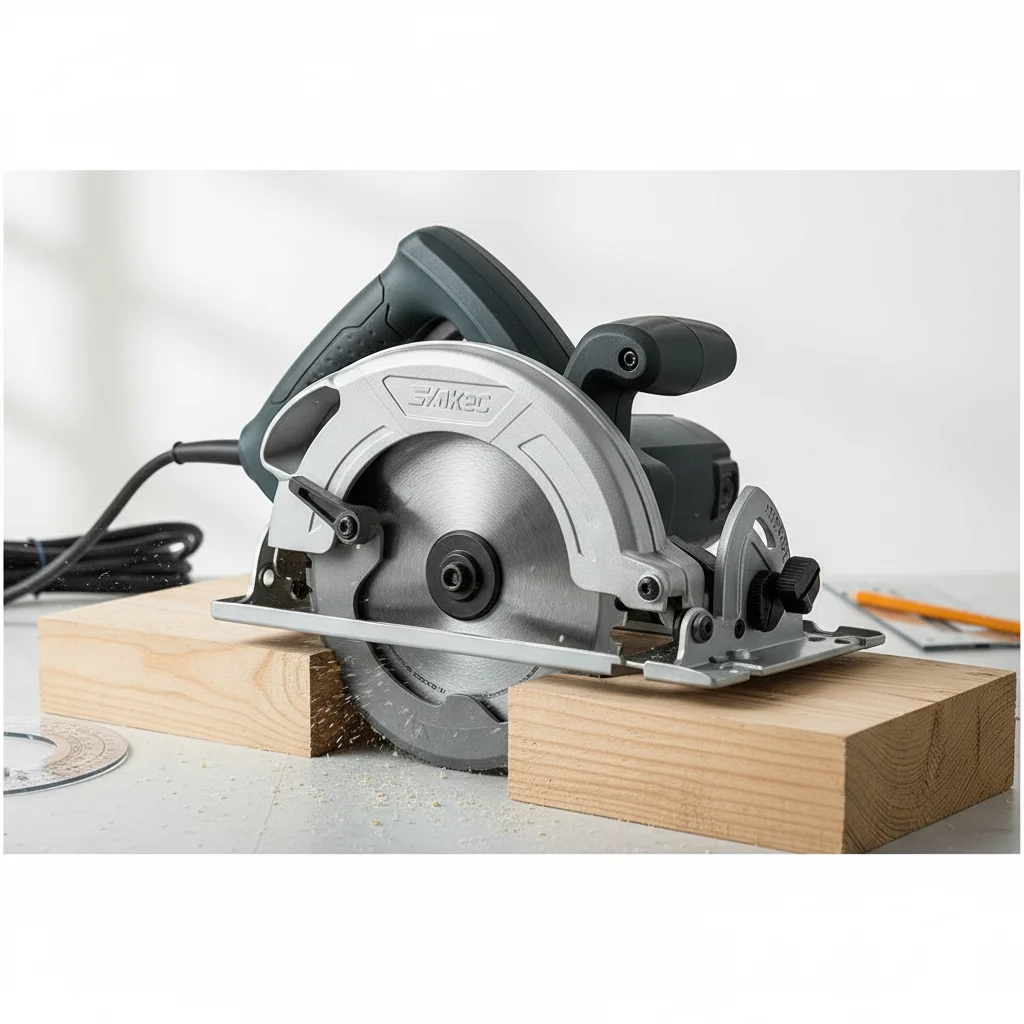
Mastering circular saw bevel cuts is essential for achieving precise angles in your woodworking projects. The key to successful bevel cuts lies in understanding your saw’s capabilities, setting the correct angle, and employing proper cutting techniques. This guide will walk you through the steps to make accurate bevel cuts, ensuring clean and professional results every time.
Understanding Your Circular Saw’s Bevel Capacity
Most circular saws can make bevel cuts up to 45 or 50 degrees, with some models offering even greater flexibility. Before starting any project, familiarize yourself with your saw’s bevel adjustment mechanism. Typically, there’s a lever or knob at the front of the saw that allows you to tilt the base plate. Always ensure the saw is unplugged when making adjustments.
Check the angle scale on your saw to confirm the desired degree. It’s often a good practice to make a test cut on a scrap piece of material to verify the accuracy of your setting. This helps prevent errors on your final workpiece and allows you to fine-tune the angle if necessary.
Setting Up for Accurate Bevel Cuts
Proper setup is crucial for accurate bevel cuts. First, ensure your workpiece is securely clamped to prevent movement during the cut. A stable work surface is equally important. For longer cuts, consider using a straight edge or guide to maintain a consistent line, especially when cutting at an angle.
When marking your cut line, remember that the blade will be angled, so the kerf (the width of the cut) will be wider on one side. Account for this when positioning your saw. Always wear appropriate safety gear, including safety glasses and hearing protection, before operating your circular saw.
Techniques for Smooth Bevel Cuts
|
Our Picks for the Best Circular Saw in 2026
As an Amazon Associate I earn from qualifying purchases.
|
||
| Num | Product | Action |
|---|---|---|
| 1 | RIDGID 18V SUBCOMPACT BRUSHLESS Cordless 6-1/2 in. Circular Saw Tool ONLY R8656B |

|
| 2 | Ryobi 14 Amp 7-1/4" Adjustable Electric Circular Saw w/Exactline Laser | CSB135L |
|
| 3 | Makita 5477NB 7-1/4" Hypoid Saw |
|
| 4 | Ridgid ZRR32104 THRUCOOL 7-1/4 in. Worm Drive Saw (Renewed) |
|
| 5 | RYOBI Circular Saw CSB125 13-Amp 7-1/4 in. Electric (Renewed) |
|
| 6 | Makita 5377MG 7-1/4" Magnesium Hypoid Saw |
|
| 7 | RIDGID 18V Cordless 6 1/2 in. Circular Saw (Tool Only) |
|
| 8 | Cordless Circular Saw 6-1/2" for Makita 18V Battery (Not Inclued), 4500RPM Power Circular Saws w/Laser Guide, 0-45° Bevel Capability, Max 2-3/16" Depth, Electric Saw for Wood Plastic |
|
| 9 | Seesii Mini Circular Saw with Laser Guide,4.8A 4000 RPM Compact Corded Circular Saw with Rip Guide,3 Blades (4-1/2") for Wood,Soft Metal,Tile,Plastic Cutting,Max Cut Depth 1-11/16"(90°),1-1/8" (45°) |
|
| 10 | Mini Circular Saw, 4Amp 3500RPM Corded Compact Saw with 4-1/2" 24T TCT Blades, Laser Guide, Rip Guide, Vacuum Adapter and Blade Wrench, Max Cutting Depth 1-11/16"(90°), 1-1/8"(45°) |
|
To achieve a smooth bevel cut, start the saw before it contacts the material and allow it to reach full speed. Maintain a consistent, steady feed rate throughout the cut. Avoid forcing the saw, as this can lead to blade binding, kickback, and a rougher cut. Let the saw’s motor do the work.
When finishing the cut, support the offcut piece to prevent it from breaking away prematurely, which can cause splintering or damage to your blade. If you’re cutting through thick material, you might need to make a shallow scoring cut first, then follow up with a full-depth cut to reduce tear-out.
- Always unplug the saw before making any adjustments.
- Use a test piece to verify your bevel angle.
- Securely clamp your workpiece to prevent movement.
- Maintain a consistent feed rate; do not force the saw.
- Support the offcut to prevent splintering.
Common Challenges and Troubleshooting
One common challenge with bevel cuts is tear-out, especially on the top surface of the material. To minimize this, use a sharp blade designed for fine cuts and consider placing painter’s tape along the cut line. Another issue can be inconsistent angles; this often points to an improperly calibrated saw or a loose bevel adjustment mechanism. Regularly check and tighten all fasteners on your saw.
If your saw struggles to cut through the material at an angle, it might be an indication of a dull blade or insufficient motor power for the task. Consider upgrading your blade or using a more powerful saw for demanding bevel cuts.for a selection of high-performance blades.
Maintaining Your Saw for Optimal Bevel Performance
Regular maintenance is key to ensuring your circular saw performs optimally for bevel cuts. Keep your blade clean and sharp; a dull blade will not only produce poor cuts but also put unnecessary strain on the motor. Periodically clean the saw’s base plate and bevel adjustment mechanism to prevent sawdust and debris from hindering smooth operation.
Check the alignment of your saw’s base plate and blade regularly. If they are out of alignment, your bevel cuts will not be accurate. Consult your saw’s manual for specific calibration instructions. Investing in a quality circular saw can also make a significant difference in the precision and ease of making bevel cuts.to explore top-rated circular saws.
