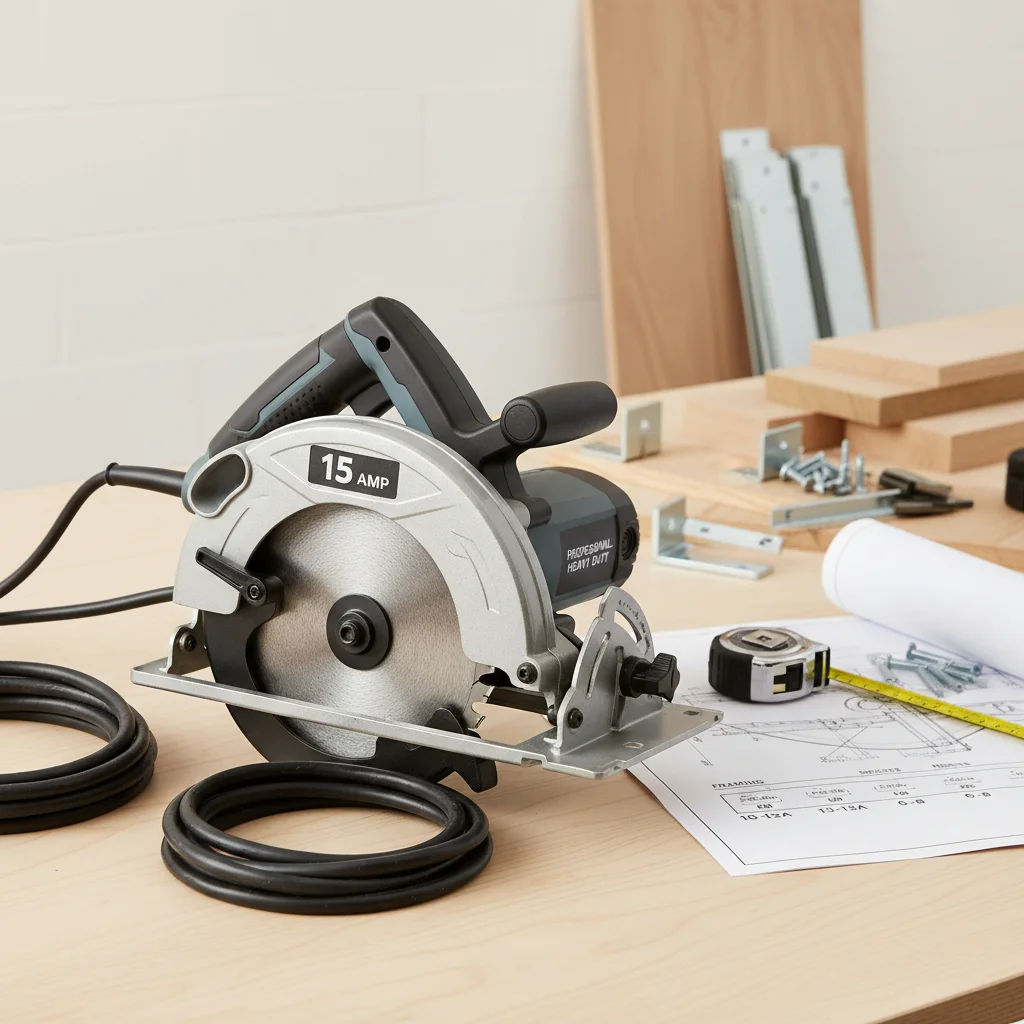
Understanding the amperage of your circular saw is crucial for matching the tool to the task at hand. Generally, circular saws range from 10 to 15 amps, with higher amperage indicating more power for tougher materials and longer cuts. For most DIY projects involving common lumber, a 12-amp saw offers a good balance of power and maneuverability, while professional contractors often opt for 15-amp models for demanding jobs.
Why Amperage Matters for Your Circular Saw
Amperage directly correlates to the power output of a corded circular saw. A higher amp rating means the motor can draw more electrical current, resulting in greater torque and the ability to maintain blade speed under load. This is particularly important when cutting dense materials like hardwoods, pressure-treated lumber, or multiple sheets of plywood. A saw with insufficient amperage for a given task will bog down, overheat, and potentially lead to kickback, compromising both safety and cut quality.
Choosing the Right Amperage for DIY Projects
For the average homeowner tackling weekend projects like building shelves, repairing fences, or cutting dimensional lumber for small constructions, a circular saw in the 10- to 12-amp range is typically sufficient. These saws are lighter, easier to handle, and more affordable, making them ideal for occasional use. They can comfortably cut through 2x4s, plywood, and OSB without excessive strain. Look for models that offer good ergonomics and safety features.
- 10-11 Amps: Best for light-duty tasks, thin materials, and occasional use.
- 12-13 Amps: Versatile for most common DIY projects, including framing and decking.
- 14-15 Amps: Ideal for heavy-duty DIY, hardwoods, and prolonged cutting sessions.
Amperage for Professional and Heavy-Duty Use
|
Our Picks for the Best Circular Saw in 2026
As an Amazon Associate I earn from qualifying purchases.
|
||
| Num | Product | Action |
|---|---|---|
| 1 | Seesii Mini Circular Saw with Laser Guide,4.8A 4000 RPM Compact Corded Circular Saw with Rip Guide,3 Blades (4-1/2") for Wood,Soft Metal,Tile,Plastic Cutting,Max Cut Depth 1-11/16"(90°),1-1/8" (45°) |

|
| 2 | RIDGID 18V SUBCOMPACT BRUSHLESS Cordless 6-1/2 in. Circular Saw Tool ONLY R8656B |
|
| 3 | Ridgid ZRR32104 THRUCOOL 7-1/4 in. Worm Drive Saw (Renewed) |
|
| 4 | Ryobi 14 Amp 7-1/4" Adjustable Electric Circular Saw w/Exactline Laser | CSB135L |
|
| 5 | Makita 5377MG 7-1/4" Magnesium Hypoid Saw |
|
| 6 | RIDGID 18V Cordless 6 1/2 in. Circular Saw (Tool Only) |
|
| 7 | RYOBI Circular Saw CSB125 13-Amp 7-1/4 in. Electric (Renewed) |
|
| 8 | Cordless Circular Saw 6-1/2" for Makita 18V Battery (Not Inclued), 4500RPM Power Circular Saws w/Laser Guide, 0-45° Bevel Capability, Max 2-3/16" Depth, Electric Saw for Wood Plastic |
|
| 9 | Mini Circular Saw, 4Amp 3500RPM Corded Compact Saw with 4-1/2" 24T TCT Blades, Laser Guide, Rip Guide, Vacuum Adapter and Blade Wrench, Max Cutting Depth 1-11/16"(90°), 1-1/8"(45°) |
|
| 10 | Makita 5477NB 7-1/4" Hypoid Saw |
|
Professionals and serious DIYers who frequently work with thick lumber, engineered wood products, or need to make long, continuous cuts will benefit significantly from a 14- to 15-amp circular saw. These high-power saws are designed for sustained performance and can handle the rigors of a job site. They are less likely to stall and provide cleaner, more consistent cuts even in challenging materials. While heavier, their robust construction ensures durability and longevity.
Cordless Circular Saws and Amperage Equivalents
While corded saws are rated by amperage, cordless circular saws are typically rated by voltage (e.g., 18V, 20V, 60V). Higher voltage generally indicates more power, similar to how higher amperage does for corded tools. For example, an 18V cordless saw might be comparable to a 10-12 amp corded saw for many tasks, while a 60V cordless saw can rival the power of a 15-amp corded model. When choosing a cordless saw, consider the battery platform and its capacity (Ah) for run time.
Safety Considerations with High-Amperage Saws
Regardless of the amperage, always prioritize safety when operating a circular saw. Higher-amperage saws, due to their increased power, can be more demanding to control if not handled properly. Ensure you use sharp blades appropriate for the material, wear proper personal protective equipment (PPE), and maintain a firm grip on the tool. Always unplug corded saws before making any adjustments or blade changes. Understanding the power of your tool helps prevent accidents and ensures efficient operation.

As a professional contractor, I can’t stress enough how vital a high-amp saw is. I rely on my 15-amp circular saw daily for demanding jobs, and it never lets me down. The ability to maintain blade speed under load, especially with hardwoods, saves so much time and frustration. It’s definitely a tool that pays for itself.
I picked up a 10-amp saw for a really good price, thinking it would be fine for occasional use. While it handles basic cuts on thinner wood okay, I found it really struggled when I tried to cut multiple sheets of plywood. It just kept bogging down and felt like it was overheating. Wish I’d paid more attention to the amperage recommendations for denser materials before buying.
This really clarified the whole 10-15 amp range for me. I do a lot of general DIY around the house, mostly common lumber for shelves and small furniture. My 12-amp saw has always felt pretty good, and now I know why it’s considered a good balance. It’s nice to have that confirmation that I’ve got the right tool for my typical projects.
I’ve always just grabbed whatever saw was handy, but after reading about how important amperage is, I finally understand why my old 10-amp saw struggled with pressure-treated lumber. Upgraded to a 15-amp model for a deck project and it’s a night and day difference. Cuts through everything like butter, no bogging down at all. Definitely worth investing in the right power for the job.