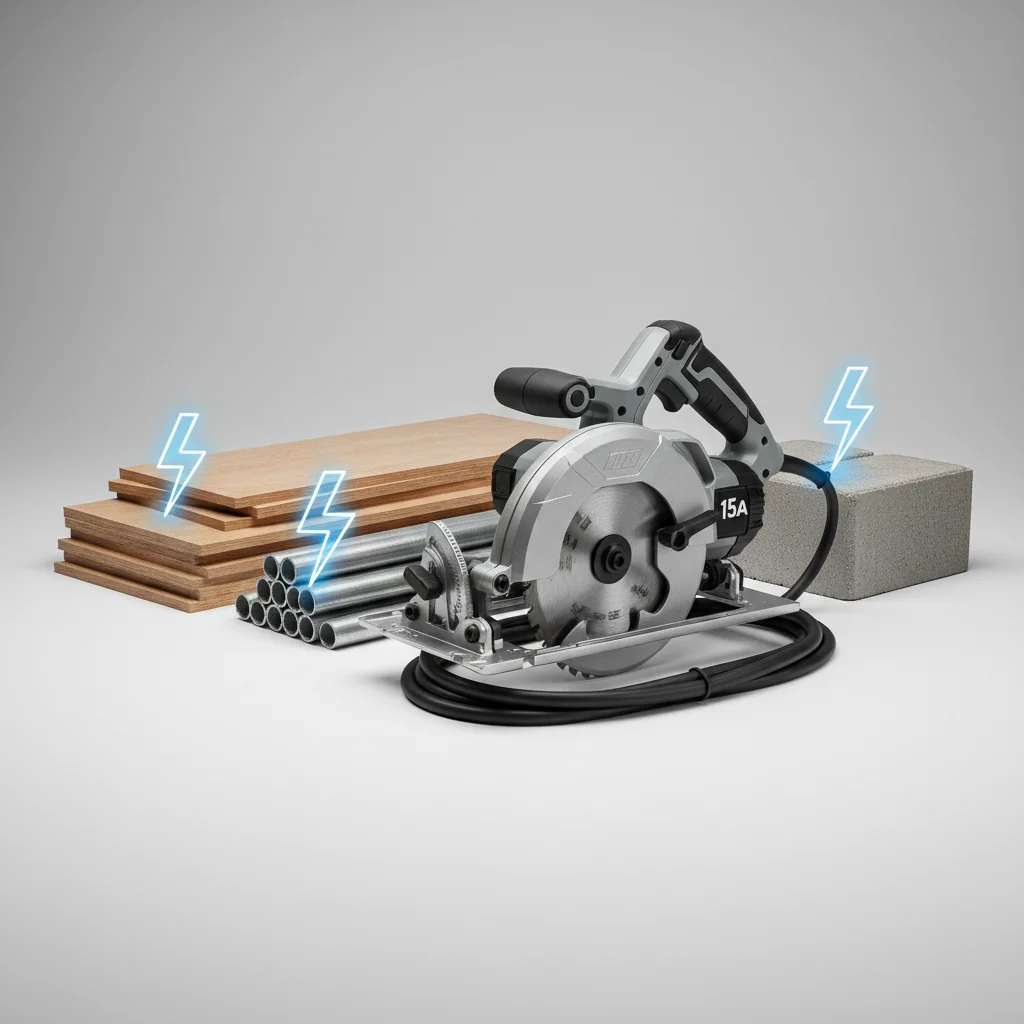
Understanding circular saw amperage is crucial for selecting the right tool for your projects. Generally, a circular saw with 10-12 amps is sufficient for most DIY tasks involving wood and softer materials, while 13-15 amps are recommended for tougher materials like hardwoods, pressure-treated lumber, and occasional light metal cutting. Professional contractors often opt for 15-amp saws for their consistent power and durability.
Why Amperage Matters for Circular Saws
Amperage directly correlates with the power output of a corded circular saw. Higher amperage means more power, which translates to the saw’s ability to cut through denser materials without bogging down or overheating. This is especially important when making long cuts or working with thick stock, as a underpowered saw can lead to frustration, poor cut quality, and even kickback.
For cordless circular saws, voltage (e.g., 18V, 20V) is the primary indicator of power, though some manufacturers also list amp-hour (Ah) ratings for battery capacity, which affects run time. When comparing corded models, always look at the amp rating to gauge its cutting capability.
Recommended Amperage for Common Materials
The type of material you’re cutting will dictate the minimum amperage required for efficient and safe operation. Here’s a breakdown:
- Softwoods (Pine, Spruce, Fir): 10-12 amps are generally adequate. These saws are lighter and easier to handle for basic framing or trim work.
- Hardwoods (Oak, Maple, Cherry): 13-15 amps are highly recommended. The extra power prevents the blade from binding and ensures cleaner cuts.
- Plywood, OSB, MDF: 12-14 amps will handle most sheet goods effectively. Consider a higher amp model for thicker sheets or repetitive cuts.
- Pressure-Treated Lumber: 14-15 amps are ideal due to the density and moisture content of this material.
- Plastics and Composites: 10-13 amps are usually sufficient, but blade choice is equally important here.
Always match your saw’s power to the task at hand to avoid straining the motor and to achieve the best results.
Impact of Amperage on Performance and Durability
|
Our Picks for the Best Circular Saw in 2026
As an Amazon Associate I earn from qualifying purchases.
|
||
| Num | Product | Action |
|---|---|---|
| 1 | Makita 5377MG 7-1/4" Magnesium Hypoid Saw |

|
| 2 | Ryobi 14 Amp 7-1/4" Adjustable Electric Circular Saw w/Exactline Laser | CSB135L |
|
| 3 | RIDGID 18V Cordless 6 1/2 in. Circular Saw (Tool Only) |
|
| 4 | Seesii Mini Circular Saw with Laser Guide,4.8A 4000 RPM Compact Corded Circular Saw with Rip Guide,3 Blades (4-1/2") for Wood,Soft Metal,Tile,Plastic Cutting,Max Cut Depth 1-11/16"(90°),1-1/8" (45°) |
|
| 5 | RYOBI Circular Saw CSB125 13-Amp 7-1/4 in. Electric (Renewed) |
|
| 6 | Ridgid ZRR32104 THRUCOOL 7-1/4 in. Worm Drive Saw (Renewed) |
|
| 7 | RIDGID 18V SUBCOMPACT BRUSHLESS Cordless 6-1/2 in. Circular Saw Tool ONLY R8656B |
|
| 8 | Makita 5477NB 7-1/4" Hypoid Saw |
|
| 9 | Mini Circular Saw, 4Amp 3500RPM Corded Compact Saw with 4-1/2" 24T TCT Blades, Laser Guide, Rip Guide, Vacuum Adapter and Blade Wrench, Max Cutting Depth 1-11/16"(90°), 1-1/8"(45°) |
|
| 10 | Cordless Circular Saw 6-1/2" for Makita 18V Battery (Not Inclued), 4500RPM Power Circular Saws w/Laser Guide, 0-45° Bevel Capability, Max 2-3/16" Depth, Electric Saw for Wood Plastic |
|
A circular saw with appropriate amperage for its intended use will perform better and last longer. An underpowered saw constantly working at its limit will generate more heat, leading to premature motor wear and potential failure. Conversely, a saw with ample power will cut more smoothly, reduce user fatigue, and maintain its performance over time.
Consider the frequency of use as well. If you’re a casual DIYer making occasional cuts, a 10-12 amp saw might suffice. However, for regular use or more demanding projects, investing in a 13-15 amp model is a wise decision for its longevity and versatility.
Choosing the Right Amperage for Your Needs
When selecting a circular saw, think about your typical projects. If you primarily work with thinner softwoods for crafts or small repairs, a lower amperage model will be more than capable. For those tackling home renovations, deck building, or working with a variety of materials, a higher amperage saw will offer the necessary power and flexibility.
Don’t just focus on the highest number; consider the balance between power, weight, and features. A 15-amp saw might be overkill and heavier for someone who only cuts thin plywood. Always read reviews and compare specifications to find the best fit for your specific requirements.
Safety Considerations with Circular Saw Amperage
While higher amperage means more power, it also means the saw can generate more torque. This makes proper technique and safety precautions even more critical. Always ensure your blade is sharp and appropriate for the material, and maintain a firm grip on the saw. Overloading a circuit with a high-amperage saw can also be a hazard, so be mindful of your power source and extension cord ratings.
Never force a saw through material, regardless of its amperage. Let the blade do the work. If the saw is struggling, it could indicate an issue with the blade, the material, or that the saw is simply not powerful enough for the task.
