Have you ever found yourself in the middle of a DIY project, needing to cut metal but only having a wood circular saw at hand? It’s a common dilemma for many home renovators and hobbyists. While primarily designed for timber, a circular saw can indeed tackle certain metal-cutting tasks, but only with the right approach and strict safety protocols. This guide will walk you through the essential knowledge, techniques, and precautions needed to safely and effectively cut metal using your circular saw, ensuring your projects run smoothly without compromising your safety or damaging your tools.
Overview of Circular Saws
A circular saw is a versatile handheld power tool featuring a rotating, disc-shaped blade. Renowned for its ability to make straight, precise cuts rapidly through wood, it’s a staple in woodworking, construction, and general DIY. Its portability and power make it ideal for a variety of tasks, from framing walls to cutting plywood.
Historically, the circular saw has evolved significantly since its invention in the late 18th century, becoming more compact, powerful, and adaptable. Compared to other cutting tools like hacksaws or jigsaws, circular saws offer speed and efficiency for long, straight cuts. However, their primary design for wood means they have different blade speeds and torque characteristics than dedicated metal-cutting tools. This distinction becomes critical when considering metal applications. For shop curated circular saw on this site.
Types of Circular Saws
Circular saws come in various forms, each suited for different applications and power requirements. Understanding these classifications can help clarify their potential for metalwork.
By Power Source
Circular saws are broadly categorized by their power source:
- Corded Circular Saws: These saws connect directly to an electrical outlet, offering consistent power for extended periods. They are typically more powerful, with amperages often ranging from 10 to 15 amps, making them suitable for demanding tasks.
- Cordless Circular Saws: Powered by rechargeable batteries, these saws offer unparalleled portability and flexibility, allowing users to work in remote locations without power access. While battery technology has advanced significantly, their power output and runtime might be slightly less than corded models, especially for tougher materials.
By Purpose of Use
While all are “circular saws,” there are critical design differences based on their intended material:
- Wood-Cutting Circular Saws: These are the most common type, designed with higher RPMs (revolutions per minute) to efficiently cut through wood fibers. Their open housing is meant to manage sawdust.
- Metal-Cutting Circular Saws: These specialized saws are engineered with lower RPMs but higher torque, specifically to cut metal without excessive heat buildup. They often feature enclosed motor housings and debris collectors to contain hot metal chips and sparks, protecting both the user and the tool.
By Size and Power
|
Our Picks for the Best Circular Saw in 2026
As an Amazon Associate I earn from qualifying purchases.
|
||
| Num | Product | Action |
|---|---|---|
| 1 | Seesii Mini Circular Saw with Laser Guide,4.8A 4000 RPM Compact Corded Circular Saw with Rip Guide,3 Blades (4-1/2") for Wood,Soft Metal,Tile,Plastic Cutting,Max Cut Depth 1-11/16"(90°),1-1/8" (45°) |

|
| 2 | Makita 5377MG 7-1/4" Magnesium Hypoid Saw |
|
| 3 | Ryobi 14 Amp 7-1/4" Adjustable Electric Circular Saw w/Exactline Laser | CSB135L |
|
| 4 | RIDGID 18V Cordless 6 1/2 in. Circular Saw (Tool Only) |
|
| 5 | Ridgid ZRR32104 THRUCOOL 7-1/4 in. Worm Drive Saw (Renewed) |
|
| 6 | RYOBI Circular Saw CSB125 13-Amp 7-1/4 in. Electric (Renewed) |
|
| 7 | Mini Circular Saw, 4Amp 3500RPM Corded Compact Saw with 4-1/2" 24T TCT Blades, Laser Guide, Rip Guide, Vacuum Adapter and Blade Wrench, Max Cutting Depth 1-11/16"(90°), 1-1/8"(45°) |
|
| 8 | Makita 5477NB 7-1/4" Hypoid Saw |
|
| 9 | RIDGID 18V SUBCOMPACT BRUSHLESS Cordless 6-1/2 in. Circular Saw Tool ONLY R8656B |
|
| 10 | Cordless Circular Saw 6-1/2" for Makita 18V Battery (Not Inclued), 4500RPM Power Circular Saws w/Laser Guide, 0-45° Bevel Capability, Max 2-3/16" Depth, Electric Saw for Wood Plastic |
|
Circular saws vary in blade diameter and motor strength. Standard wood-cutting saws often use 7-1/4 inch blades. For metal cutting, models with a 15-amp motor are generally considered the minimum for tackling anything beyond thin sheet metal. Higher amperage saws provide the necessary power for more substantial cuts, while smaller blade sizes on dedicated metal saws can help achieve even lower RPMs for safer and more controlled metal cutting.
Can You Cut Metal with a Wood Circular Saw?
The short answer is yes, you can cut some types of metal with a standard circular saw, but only with significant modifications and strict adherence to safety. Crucially, you must never use a wood-cutting blade on metal. This is a recipe for serious injury and tool damage.
The Dangers of Using a Wood Blade on Metal
Attempting to cut metal with a wood-cutting circular saw blade is extremely dangerous. Wood blades are designed with specific tooth geometry and materials for cutting wood fibers, not dense metal. The consequences can include:
- Blade Shattering and Kickback: Wood blades can shatter or bind when encountering metal, causing fragments to fly at high speeds or the saw to violently kick back towards the user.
- Saw Damage: The high RPMs of a wood saw, combined with the resistance of metal, can cause extreme heat, strain the motor, damage the gears, and shorten the saw’s lifespan. Hot metal fragments can also enter and damage the saw’s internal components.
- Excessive Heat and Sparks: Cutting metal with the wrong blade generates immense heat and a dangerous shower of sparks, which can ignite nearby flammable materials or cause severe burns.
- Poor Cut Quality: The inappropriate blade will lead to rough, jagged cuts, making the workpiece unusable and increasing the risk of injury during handling.
The Critical Role of a Metal-Cutting Blade
The most crucial factor for safely cutting metal with a circular saw is using a blade specifically designed for metal. These blades differ significantly from wood blades:
- Material and Tooth Geometry: Metal-cutting blades typically feature carbide-tipped teeth (TCT) or diamond tips for harder metals like stainless steel. Their teeth are smaller, more numerous, and designed with specific rake angles and side clearances to efficiently cut through metal, clear chips, and resist heat buildup.
- Lower RPM Operation: Metal cutting requires slower speeds than wood. The correct metal-cutting blade is designed to work effectively at these lower RPMs, reducing friction, heat, and the risk of blade failure.
- Heat Resistance: The materials and design of metal-cutting blades are optimized to withstand the high temperatures generated during metal cutting, preventing warping and premature wear.
Types of Metal You Can (and Cannot) Cut
Even with the correct blade, a standard circular saw has limitations when cutting metal:
- Metals You Can Realistically Cut:
- Thin Mild Steel: Approximately 1/8 inch (3 mm) thick, common in electrical junction boxes, can generally be handled by a 15-amp saw with a good ferrous metal blade. Thicker mild steel up to 1/4 inch (6 mm) is near the limit, requiring a higher-powered saw, slow feed, and frequent breaks.
- Aluminum and Other Non-Ferrous Metals (Copper, Brass): These softer metals are generally easier to cut. Aluminum plates up to 3/8 inch (9.5 mm) have been successfully cut. Non-ferrous specific blades help prevent chip welding.
- Metals You Should Avoid (or use specialized tools for):
- Thick or Hardened Steel: Exceeds the capabilities of most standard circular saws, leading to excessive strain, slow cutting, and potential damage.
- Stainless Steel: Its work-hardening properties make it challenging to cut, especially when thicker than 1/4 inch. It requires premium carbide-tipped stainless steel blades, slow, continuous cuts, and frequent cooling breaks to prevent work hardening. For significant stainless steel work, a specialized tool is strongly recommended.
- Corrugated or Perforated Metal without Support: Can lead to blade snagging and kickback.
How to Safely Cut Metal with a Circular Saw (DIY Guide)
Cutting metal, even with the right blade, introduces specific hazards. Prioritizing safety is paramount for any DIY metal-cutting project.
Essential Safety Gear (PPE)
Always wear appropriate personal protective equipment:
- Eye Protection: Safety goggles or glasses with side shields are crucial to protect against high-speed metal shards, sparks, and dust.
- Hearing Protection: Circular saws can generate piercing noise levels. Industrial-grade earmuffs or earplugs are essential to prevent permanent hearing loss.
- Hand Protection: Durable work gloves protect your hands from sharp edges, hot metal, and potential blade contact.
- Body Protection: Long sleeves made of durable material, long pants, and closed-toe shoes will shield your skin from flying chips and sparks. Avoid loose clothing or jewelry that could get caught in the spinning blade.
- Dust Mask: While less dusty than wood, cutting some metals or coated materials can release fine particles or fumes. A dust mask can prevent inhalation of harmful substances.
Preparing Your Workpiece and Saw
Proper setup is key to a safe and effective cut:
- Work Surface: Use a sturdy, stable work surface, preferably steel sawhorses with a sacrificial plywood top, to absorb impact and prevent damage.
- Mark Your Cut: Clearly mark your cutting line with a marker or scoring tool.
- Secure the Workpiece: Always clamp the metal workpiece firmly to prevent movement, which can cause kickback, blade damage, or inaccurate cuts. Ensure the clamps do not interfere with the blade’s path.
- Blade Installation: Install the appropriate metal-cutting blade (carbide-tipped for ferrous metals, non-ferrous specific for aluminum/copper, diamond-tipped for stainless steel). Ensure it is tightened securely.
- Blade Depth: Adjust the blade depth so it extends only slightly (about 1/4 inch or 6mm) beyond the thickness of the metal. This minimizes the risk of sparks and blade damage.
- Saw Speed (if variable): If your circular saw has variable speed settings, select a lower RPM setting for cutting metal to prevent overheating and prolong blade life.
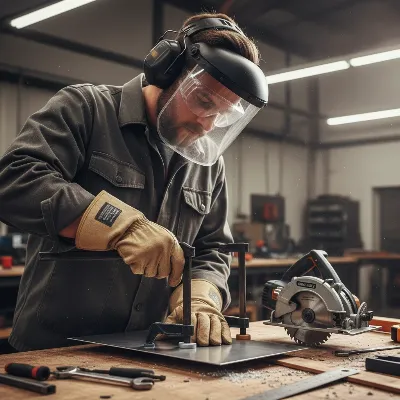 A DIY enthusiast wearing full safety gear (goggles, gloves, earmuffs, long sleeves) while preparing to cut thin metal with a circular saw.
Cutting Techniques
Executing the cut correctly is as important as the preparation:
- Initiate the Cut: With the saw held firmly with both hands, align the blade with your marked line without it touching the metal. Power up the saw and allow the blade to reach full speed before slowly entering the metal.
- Slow and Steady Pace: Move the saw through the metal at a slow, consistent pace. Do not force the saw; let the blade do the work. Rushing can cause overheating, blade damage, and imprecise cuts.
- Cutting Fluid/Lubricant: For longer or thicker cuts, apply cutting fluid or lubricant to the blade and the cutting line. This reduces friction, dissipates heat, and extends blade life.
- Cooling Breaks: For extensive cutting or thicker materials, take regular breaks to allow both the saw and the blade to cool down, preventing overheating.
- Guide Rail: For precise, straight cuts, especially on longer pieces, consider using a guide rail.
- Complete the Cut: Once the cut is finished, release the trigger and allow the blade to stop completely before lifting the saw away from the workpiece. Do not touch the cut edge or the blade immediately after cutting, as they will be extremely hot.
Dedicated Metal-Cutting Circular Saws vs. Standard Wood Circular Saws
While a standard circular saw can be adapted for occasional light metal cutting, dedicated metal-cutting circular saws offer superior performance and safety for frequent or heavy-duty metalwork. The distinctions are significant:
- RPMs and Torque: Dedicated metal saws operate at much lower RPMs (e.g., 3,000-4,000 RPM vs. 5,000-5,800 RPM for wood saws) but deliver higher torque. This slower speed is crucial for cutting metal efficiently and safely, as higher speeds generate excessive heat and wear.
- Motor Housing and Debris Management: Metal-cutting saws typically feature closed housings to protect the motor from abrasive metal chips and debris. Many also include optional debris collectors to manage hot shavings, which wood saws lack.
- Blade Size: Dedicated metal saws often use smaller blades (e.g., 5-3/8 inch or 8 inch) which further contribute to lower tooth speeds and improved control.
- Durability: These saws are built to withstand the rigors of metal cutting, featuring more robust components that can handle the increased strain and heat.
If metal cutting is a regular part of your DIY or professional work, investing in a dedicated metal-cutting circular saw is highly recommended. It will provide cleaner cuts, extend tool life, and significantly enhance safety compared to adapting a wood-cutting saw.
Alternatives to a Circular Saw for Metal Cutting
For tasks beyond the capability or safety scope of a circular saw, several specialized tools excel at cutting metal:
- Angle Grinder: A highly versatile tool for cutting, grinding, and polishing metal. It uses abrasive discs and is excellent for rough cuts, shaping, and removing material. However, it generates significant sparks and debris.
- Chop Saw (Abrasive or Cold-Cut): Ideal for making straight, precise cuts through metal stock, pipes, and tubing. Abrasive chop saws use friction discs, while “cold-cut” chop saws use carbide-tipped blades for cleaner, cooler cuts with fewer sparks.
- Bandsaw (Portable or Stationary): Offers smooth, continuous cutting with minimal sparks. Portable bandsaws are great for pipes, conduit, and rebar, while stationary models handle larger stock and complex shapes.
- Reciprocating Saw: A powerful handheld saw useful for demolition and rough cuts through various materials, including metal. Its primary advantage is versatility and access to awkward spaces, though it lacks precision for fine work.
- Sheet Metal Nibblers: Excellent for cutting intricate curves and shapes in thin sheet metal, preventing deformation.
- Plasma Cutter: For advanced metal fabrication, plasma cutters use an electrically heated gas to cut through thick metals rapidly and cleanly.
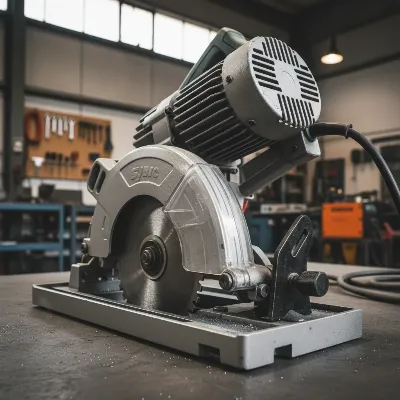 A dedicated metal-cutting circular saw with a thick carbide-tipped blade, emphasizing safety features.
Conclusion
Cutting metal with a standard circular saw is certainly possible for DIY enthusiasts, provided you approach the task with knowledge and respect for safety. The absolute golden rule is to always use a specialized metal-cutting blade and never a wood blade. Combine this with essential personal protective equipment, meticulous workpiece preparation, and controlled cutting techniques, and you can achieve satisfactory results for thin, softer metals like aluminum or mild steel. For more demanding projects or frequent metalwork, however, investing in a dedicated metal-cutting circular saw or exploring other specialized tools like an angle grinder or bandsaw will offer greater efficiency, precision, and enhanced safety.
What metal project are you tackling next, and which tool are you considering to get the job done right?
Frequently Asked Questions
Can a wood circular saw itself be damaged by cutting metal, even with the right blade?
While using a proper metal-cutting blade significantly reduces the risk, a standard wood circular saw can still experience accelerated wear and tear when used frequently for metal. The higher RPMs of a wood saw (even with a metal blade) can cause extra strain on the motor and gears due to increased heat and resistance from metal, potentially shortening the saw’s lifespan.
How do dedicated metal-cutting circular saws differ in design from wood circular saws?
Dedicated metal-cutting circular saws feature lower RPMs but higher torque, an enclosed motor housing to protect against hot metal chips, and often a smaller blade size for slower tooth speeds. Some models also include debris collection systems, all designed to enhance safety, cut quality, and tool longevity when working with metal.
What types of metals are generally safe to cut with an adapted circular saw and the correct blade?
Thin mild steel (up to about 1/8 inch), aluminum, copper, and brass are generally safe to cut with an adapted circular saw, provided you use the correct carbide-tipped blade for the specific metal type, employ proper clamping, and follow all safety guidelines.
What safety precautions are most critical when cutting metal with a circular saw?
The most critical safety precautions include wearing full PPE (eye, ear, hand, and body protection), firmly clamping the workpiece, using a specialized metal-cutting blade, setting the blade depth correctly, and maintaining a slow, steady cutting pace to minimize kickback, sparks, and overheating.
Is cutting fluid always necessary when cutting metal with a circular saw?
Cutting fluid or lubricant is highly recommended, especially for longer or thicker cuts, and for materials prone to generating significant heat. It helps to reduce friction, dissipate heat, prolong blade life, and can result in a cleaner cut. For very thin or soft metals, it might be optional, but it generally improves the cutting process.
What are common mistakes to avoid when using a circular saw for metal?
Common mistakes include using a wood blade, not securing the workpiece with clamps, rushing the cut or forcing the saw, skipping personal protective equipment, and failing to take cooling breaks when cutting thicker materials, all of which can lead to injury, tool damage, or poor results.
