Has your trusty circular saw started to struggle, leaving behind burn marks and requiring extra force to cut through wood? The culprit isn’t always a dull blade; often, it’s a sticky buildup of pitch and resin. This common issue plagues woodworkers, hindering performance and shortening blade life. This comprehensive guide will walk you through the essential techniques and products to effectively clean pitch and resin from your circular saw blades, ensuring they cut like new and extend their lifespan for years of efficient work.
Understanding Pitch and Resin Buildup on Circular Saw Blades
Pitch and resin are natural sticky substances found in wood, especially common in softwoods like pine, fir, and spruce. When a circular saw blade cuts through these materials, the heat generated during the friction causes these sap-like substances to melt and adhere to the blade’s surface and teeth. This sticky residue often mixes with sawdust and other debris, creating a hardened, stubborn coating.
The accumulation of this grime has several detrimental effects. Firstly, it significantly increases friction between the blade and the workpiece, leading to higher operating temperatures. This extra heat not only causes unsightly burn marks on your material but also accelerates the dulling of the carbide tips and can even warp the blade itself. Secondly, pitch and resin reduce the efficiency of your cuts, forcing your saw motor to work harder and increasing the risk of kickback. Over time, this buildup can also cause premature wear on the saw’s components and shorten the overall lifespan of your blades, costing you time and money. Regular cleaning is paramount to maintaining optimal performance and extending tool longevity.
Essential Cleaning Methods for Circular Saw Blades
Restoring your circular saw blades to their pristine, sharp condition requires the right approach. Several effective methods exist, ranging from powerful chemical solutions to more gentle, natural alternatives. Each has its advantages, and understanding them will help you choose the best strategy for your specific needs and the severity of the buildup.
Chemical Cleaners
|
Our Picks for the Best Circular Saw in 2026
As an Amazon Associate I earn from qualifying purchases.
|
||
| Num | Product | Action |
|---|---|---|
| 1 | RYOBI Circular Saw CSB125 13-Amp 7-1/4 in. Electric (Renewed) |

|
| 2 | Seesii Mini Circular Saw with Laser Guide,4.8A 4000 RPM Compact Corded Circular Saw with Rip Guide,3 Blades (4-1/2") for Wood,Soft Metal,Tile,Plastic Cutting,Max Cut Depth 1-11/16"(90°),1-1/8" (45°) |
|
| 3 | Makita 5377MG 7-1/4" Magnesium Hypoid Saw |
|
| 4 | Cordless Circular Saw 6-1/2" for Makita 18V Battery (Not Inclued), 4500RPM Power Circular Saws w/Laser Guide, 0-45° Bevel Capability, Max 2-3/16" Depth, Electric Saw for Wood Plastic |
|
| 5 | Ryobi 14 Amp 7-1/4" Adjustable Electric Circular Saw w/Exactline Laser | CSB135L |
|
| 6 | RIDGID 18V Cordless 6 1/2 in. Circular Saw (Tool Only) |
|
| 7 | Mini Circular Saw, 4Amp 3500RPM Corded Compact Saw with 4-1/2" 24T TCT Blades, Laser Guide, Rip Guide, Vacuum Adapter and Blade Wrench, Max Cutting Depth 1-11/16"(90°), 1-1/8"(45°) |
|
| 8 | RIDGID 18V SUBCOMPACT BRUSHLESS Cordless 6-1/2 in. Circular Saw Tool ONLY R8656B |
|
| 9 | Makita 5477NB 7-1/4" Hypoid Saw |
|
| 10 | Ridgid ZRR32104 THRUCOOL 7-1/4 in. Worm Drive Saw (Renewed) |
|
For tough, baked-on pitch and resin, specialized chemical cleaners offer a potent solution. Products like Rockler’s Pitch and Resin Remover or CMT Blade and Bit Cleaner are formulated to break down these stubborn residues quickly. Many commercial blade cleaners are citrus-based, making them effective yet less caustic than some industrial alternatives. These often require soaking the blade for a short period, followed by light scrubbing. When using commercial cleaners, always follow the manufacturer’s instructions for application and safety, as some may still require gloves and eye protection due to their chemical composition.
Natural/Household Solutions
Many woodworkers prefer household items for cleaning, valuing their accessibility and often milder nature. Several common products can effectively tackle pitch and resin buildup:
- Denatured Alcohol (DNA): This is a highly effective solvent for resin, often dissolving buildup within minutes for easy wiping. It’s generally safe for blade coatings and carbide brazing.
- Simple Green: A popular, non-toxic, and biodegradable option, Simple Green is a professional-grade cleaner that can be diluted or used concentrated. Many users achieve excellent results by soaking blades for a few minutes to an hour and then scrubbing.
- Dawn Dish Soap/Soapy Water: For lighter or fresher pitch, a simple soak in hot, soapy water can be surprisingly effective. This method is best for routine cleaning rather than heavy accumulation.
- Kerosene: Recommended by some blade manufacturers, kerosene is effective for dissolving “gooey pitch” and often involves an overnight soak in a well-ventilated container.
- Liquid Laundry Detergent: A 1:1 mixture of liquid laundry detergent and water can also be used as an effective soaking solution.
Mechanical Cleaning
While chemical or natural solutions do most of the heavy lifting, mechanical action is often necessary to dislodge stubborn deposits.
- Brass Brushes: These are ideal for scrubbing uncoated carbide-tipped blades. The soft brass bristles are effective at removing gunk without damaging the carbide tips or the blade’s metal surface.
- Nylon Brushes or Old Toothbrushes: For blades with low-friction coatings, or for general scrubbing, nylon or old toothbrushes are gentler alternatives that won’t scratch or remove the coating.
- Plastic Scrapers: For particularly thick, hardened deposits, a plastic scraper can carefully remove larger chunks before or after soaking, without risking damage to the blade.
- Steel Wool: While effective for rust removal on bare metal, exercise caution when using steel wool on carbide-tipped blades, as it can be too abrasive for the tips.
> “The key to effective blade cleaning isn’t just one product, but understanding the interaction between the cleaning agent and the type of buildup. Often, a combination of soaking with a suitable solvent and gentle mechanical scrubbing yields the best results.” – Alex Stone, Master Woodworking Technician
Step-by-Step Guide to Cleaning Your Circular Saw Blade
Cleaning your circular saw blade is a straightforward process that, when done correctly, will restore its cutting performance and prolong its life. Follow these steps for a thorough and safe cleaning.
-
Preparation and Safety:
Before anything else, prioritize safety. Always ensure your saw is unplugged before attempting to remove the blade. Wear heavy-duty work gloves to protect your hands from sharp teeth and eye protection to shield against splashes if using chemical cleaners. If working with chemicals, ensure your workspace is well-ventilated.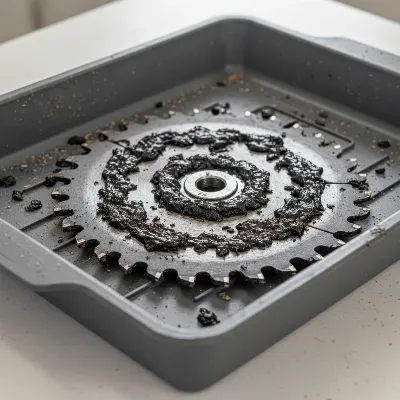 A circular saw blade heavily coated with dark pitch and resin buildup on its teeth and gullets, lying in a shallow plastic tray.
 -
Remove the Blade:
Carefully remove the blade from your circular saw following the manufacturer’s instructions. This usually involves loosening an arbor nut with a wrench. Once removed, inspect the blade for any signs of damage like chipped teeth or excessive rust. If heavily damaged or dull beyond cleaning, consider sharpening or replacing the blade. -
Choose Your Cleaning Solution and Container:
Select your preferred cleaning solution – whether a commercial blade cleaner, denatured alcohol, Simple Green, or a mixture of liquid laundry detergent and water. Find a flat, shallow container or pan (like an old baking sheet or plastic tub) that is large enough to submerge the entire blade. Avoid glass or ceramic containers if using a metal brush, as they could chip. -
Soak the Blade:
Lay the blade flat in the container and pour your chosen cleaning solution over it, ensuring the blade is fully submerged. The soaking time will vary depending on the cleaner and the severity of the buildup:- Commercial Cleaners/Denatured Alcohol: Typically 5-15 minutes.
- Simple Green/Laundry Detergent: 10 minutes to an hour, or even overnight for very stubborn grime.
- Kerosene: Often requires an overnight soak.
The soaking process allows the solution to penetrate and dissolve the pitch and resin, making them easier to remove.
-
Scrub and Clean:
After soaking, don your gloves and use an appropriate brush to scrub the blade.- For uncoated blades: A brass-bristle brush is excellent for removing stubborn gunk without damaging the metal.
- For coated blades: Use a soft nylon brush, an old toothbrush, or a plastic scraper to avoid scratching the coating.
- Always brush away from your body and pay close attention to the carbide teeth and the gullets (the spaces between the teeth) where buildup is most concentrated.
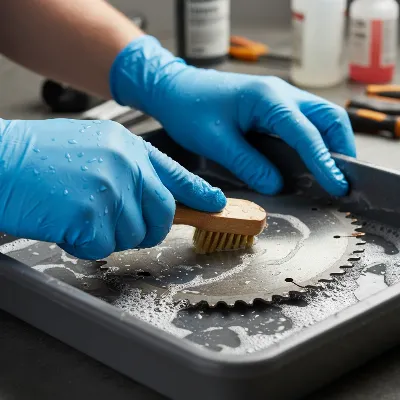 A person wearing protective gloves and eye protection, carefully scrubbing a circular saw blade with a brass-bristle brush in a shallow tray filled with cleaning solution.
 -
Rinse Thoroughly:
Once the blade appears clean, remove it from the container and rinse it thoroughly under running water. Ensure all traces of the cleaning solution and loosened residue are washed away. -
Dry Completely:
Immediately after rinsing, dry the blade completely to prevent rust. Use a clean cloth or paper towels. For an even more thorough dry, you can use warm air from a hairdryer or a can of compressed air. Do not allow the blade to air dry, as water spots can lead to rust. -
Apply Rust Preventative/Lubricant:
Once perfectly dry, apply a thin coat of rust preventative or a dry lubricant (such as WD-40, silicone spray, or a specialized blade coating) to the blade’s surface. Wipe off any excess. This step is crucial for protecting the blade from corrosion and can also help reduce future pitch buildup and friction during cuts.
Comparing Different Cleaning Products and Techniques
Choosing the right cleaning method often involves balancing effectiveness, safety, cost, and convenience. Here’s a comparison to help you decide:
| Cleaning Product/Technique | Pros | Cons | Best For |
|---|---|---|---|
| Commercial Cleaners | Highly effective, fast-acting | Can be costly, requires PPE, some are harsh | Heavy, stubborn buildup, frequent cleaning |
| Denatured Alcohol | Very effective on resin, fast, safe for coatings | Flammable, strong fumes, requires good ventilation | Quick removal of fresh resin, routine cleaning |
| Simple Green | Non-toxic, biodegradable, versatile, cost-effective | May require longer soak for heavy buildup | Regular cleaning, environmentally conscious users |
| Dawn Dish Soap | Very safe, inexpensive, readily available | Less effective on heavy, baked-on pitch | Light, fresh pitch, gentle routine cleaning |
| Kerosene | Excellent for gooey pitch | Strong odor, flammable, requires overnight soak, ventilation | Very heavy, sticky pitch buildup |
| Laundry Detergent | Inexpensive, readily available | May require longer soak, variable effectiveness | Moderate pitch, budget-friendly option |
| Oven Cleaner | Extremely effective, fast | Highly corrosive, can damage carbide brazing, toxic fumes | Strongly advised against due to blade damage risk |
| Brass Brush | Effective mechanical removal | Can scratch blade coatings, not for all blade types | Uncoated blades, dislodging soaked residue |
| Nylon Brush/Scraper | Safe for blade coatings, gentle | Less aggressive on very stubborn buildup | Coated blades, general scrubbing, light scraping |
Choosing the Right Cleaning Approach (Buying Guide)
Selecting the ideal cleaning method for your circular saw blade depends on a few critical factors unique to your woodworking habits and blade characteristics. Consider these points when making your decision:
Determine Your Usage Needs
- Casual DIYer: If you only use your saw occasionally and cut mostly clean wood, a simple solution like diluted Simple Green or dish soap might suffice for routine maintenance. You won’t typically encounter extreme buildup.
- Frequent Woodworker (Softwoods): If you regularly cut pitchy woods like pine or process a high volume of material, you’ll need a more robust solution. Commercial blade cleaners or denatured alcohol will be more effective at keeping up with the buildup.
- Industrial/Professional Use: For heavy-duty applications, investing in a dedicated blade cleaning system or strong commercial cleaners is often warranted to minimize downtime and maintain peak efficiency.
Factors to Consider When Selecting a Cleaner
- Blade Material and Coating: Most modern circular saw blades are carbide-tipped and many feature anti-friction or non-stick coatings. Always check if your chosen cleaner is safe for these materials. Strong alkaline cleaners, like oven cleaner, are often cautioned against by blade manufacturers because they can attack the binder in the carbide and the brazing that secures the teeth. For coated blades, stick to non-abrasive methods and nylon brushes.
- Severity of Buildup: For light, fresh pitch, milder solutions work. For thick, baked-on gunk, you’ll need something more aggressive that allows for adequate soaking time.
- Desired Speed and Convenience: If you need a quick turnaround, fast-acting commercial sprays or denatured alcohol are excellent choices. If you don’t mind an overnight soak, kerosene or more diluted solutions are viable.
- Safety and Environment: Consider the toxicity and flammability of the product. If working indoors or in a confined space, prioritize non-toxic, low-fume options. Always ensure good ventilation with any chemical cleaner.
Budget and Availability
Household items like dish soap, laundry detergent, or even denatured alcohol are generally inexpensive and readily available. Commercial blade cleaners can be a bit more of an investment but are often concentrated and designed for repeated use, offering good value in the long run. Consider local hardware stores or online retailers for specialized products.
Inspecting Before You Buy/Apply
Before committing to a cleaner, especially a new one, always read the product’s label and any instructions that came with your saw blade. Look for terms like “safe for carbide,” “non-corrosive,” or “citrus-based” as indicators of blade-friendly options.
Safety First: Precautions When Cleaning Saw Blades
Cleaning saw blades might seem like a simple task, but it involves sharp edges and potentially hazardous chemicals. Adhering to strict safety protocols is crucial to prevent injury and ensure the longevity of your tools.
Personal Protective Equipment (PPE)
- Gloves: Always wear heavy-duty work gloves to protect your hands from the extremely sharp carbide teeth of the blade. Even dull blades can cause serious cuts. Nitrile or chemical-resistant gloves are recommended if using strong cleaning solutions to protect your skin.
- Eye Protection: Safety glasses or goggles are non-negotiable. Chemical splashes or dislodged debris during scrubbing can cause severe eye injury.
- Ventilation: If using chemical solvents like denatured alcohol, kerosene, or commercial cleaners, ensure you work in a well-ventilated area, preferably outdoors or in a shop with open doors and windows. Fumes can be irritating or hazardous if inhaled.
Proper Blade Handling
- Unplug the Saw: Before even attempting to touch the blade, always ensure the saw is completely unplugged from its power source. This eliminates any risk of accidental startup.
- Stable Surface: Place the blade on a stable, flat surface during cleaning. Never hold it precariously, as it could slip and cause injury.
- Brush Away from Your Body: When scrubbing, always direct your brush strokes away from your body. This minimizes the risk of the blade slipping towards you and causing a cut.
- Avoid Over-Scrubbing: While stubborn buildup needs attention, aggressive scrubbing, especially with metal brushes on coated blades, can damage the blade’s surface or coating. Use appropriate brushes for the blade type.
Chemical Handling and Storage
- Read Labels: Always read and follow the instructions and safety warnings on any cleaning product you use.
- Avoid Harmful Chemicals: As highlighted, never use oven cleaners or other highly caustic (sodium hydroxide-based) products on carbide-tipped blades. These can corrode the brazing that holds the carbide teeth in place, potentially leading to teeth detaching during use, which is extremely dangerous. They can also damage any anti-friction coatings on the blade.
- Proper Disposal: Dispose of used cleaning solutions according to local regulations. Do not pour chemicals down drains if they are not designed for it.
Maintaining Your Saw Blades for Longevity
Beyond just cleaning, adopting a few maintenance habits will significantly extend the life and performance of your circular saw blades. These practices minimize wear and tear, ensuring your blades remain sharp and efficient for a longer period.
Regular Cleaning Schedule
The frequency of cleaning depends heavily on your usage and the types of wood you cut.
- After Each Project: For casual users, a quick clean after completing a project, especially if cutting softwoods, can prevent stubborn buildup.
- Every Few Hours of Use: Professional woodworkers cutting a lot of pitchy material might need to clean their blades every few hours of operation or at the end of each workday.
- Observe Your Blade: The best indicator is the blade itself. If you notice a gummy residue forming, see burn marks on your cuts, or feel increased resistance, it’s time to clean. Regular, lighter cleanings are far easier than tackling thick, hardened layers.
Proper Storage
Storing your blades correctly prevents both rust and accidental damage.
- Dry Environment: Always store clean, dry blades in a dry environment. Humidity is the enemy of metal and can quickly lead to rust formation, even on coated blades.
- Protective Sleeves/Cases: Keep blades in their original packaging, protective sleeves, or dedicated blade storage cases. This prevents the sharp teeth from being dinged or dulled by contact with other tools or surfaces, and also protects against moisture.
- Vertical Storage: Storing blades vertically can prevent them from warping under their own weight or being crushed.
When to Sharpen vs. Replace
Cleaning helps restore performance by removing buildup, but it doesn’t sharpen a dull blade.
- Signs of Dullness: If, after a thorough cleaning, your blade still struggles to cut smoothly, produces excessive sawdust instead of clean shavings, or burns wood even without pitch, it’s likely dull.
- Professional Sharpening: Carbide-tipped blades can be professionally sharpened multiple times, which is often more cost-effective than buying a new blade. Look for a reputable sharpening service that specializes in woodworking tools.
- When to Replace: Replace a blade if it has chipped or missing carbide teeth, is bent or warped, or if the kerf (the width of the cut) becomes inconsistent. These issues cannot be fixed and can be dangerous to use.
By integrating these maintenance practices into your routine, you’ll not only enjoy consistently clean and efficient cuts but also maximize the lifespan of your valuable circular saw blades.
Applications of Circular Saw Blades in Practice
A clean, well-maintained circular saw blade is the backbone of countless woodworking and construction projects. Its versatility makes it an indispensable tool for everything from intricate DIY tasks to heavy-duty industrial applications.
DIY (Do-It-Yourself) Projects
For the home enthusiast, a circular saw with a clean blade enables precision and ease in a wide array of projects:
- Shelving Units: Cutting perfectly straight and square pieces of plywood or MDF for custom shelves.
- Deck Building: Making accurate crosscuts on treated lumber for decking boards and framing.
- Fencing: Trimming fence panels and posts to size with clean edges.
- Cabinetry: Achieving professional-looking cuts on cabinet carcasses and door panels.
- Flooring Installation: Precisely cutting laminate, engineered wood, or vinyl plank flooring.
Circular Saw Blades in Industry
In professional settings, the demands on circular saw blades are even higher, making cleanliness and maintenance critical for productivity and safety.
- Construction: Essential for framing, sheathing, and general rough carpentry, where speed and consistency are key.
- Cabinet Making & Furniture Manufacturing: Used extensively for dimensioning sheet goods, dado cuts, and intricate joinery. Clean blades prevent material waste and ensure a high-quality finish.
- Woodworking Shops: From fine furniture to custom millwork, circular saws are fundamental for every stage of wood processing.
- Metal Fabrication (with appropriate blades): Specialized circular saws with specific metal-cutting blades are used to cut steel, aluminum, and other metals cleanly and efficiently, reducing the need for secondary finishing.
A dull or pitch-laden blade in these scenarios not only compromises the quality of the work but also slows down production, increases energy consumption, and poses a greater safety risk due to increased friction and kickback potential. Therefore, understanding and implementing thorough cleaning practices directly translates to better craftsmanship, efficiency, and safety across all applications.
Conclusion
Keeping your circular saw blades free from pitch and resin buildup is not merely a cosmetic endeavor; it’s a critical aspect of maintaining tool performance, ensuring safety, and extending the lifespan of your valuable equipment. From understanding the adverse effects of grime to choosing the right cleaning solution and following a systematic cleaning process, you now have the knowledge to restore your blades to their optimal cutting condition. Regular maintenance not only enhances your cuts but also makes your woodworking experience more efficient and enjoyable.
Remember, a clean blade is a happy blade, and a happy blade means better projects for you. What’s the most challenging pitch or resin buildup you’ve ever tackled, and what was your secret weapon for getting rid of it?
Frequently Asked Questions
What causes pitch and resin to build up on saw blades?
Pitch and resin originate from the sap in wood, especially softwoods like pine. The heat generated by friction during cutting causes these sticky substances to melt and adhere to the blade’s surface and teeth, often mixing with sawdust to form a hard, gummy residue.
Can I use oven cleaner to remove pitch from my saw blade?
It is strongly advised not to use oven cleaner on carbide-tipped saw blades. Oven cleaners contain harsh chemicals like sodium hydroxide, which can corrode the brazing that holds the carbide teeth in place, potentially causing them to detach during use.
How often should I clean my circular saw blades?
The frequency depends on your usage and the type of wood you cut. If you frequently cut pitchy softwoods, you might need to clean your blades after every few hours of use or at the end of each project. For occasional use, cleaning when you notice buildup, burn marks, or increased cutting resistance is sufficient.
What are the best household products for cleaning saw blades?
Effective household products include denatured alcohol, Simple Green cleaner, a solution of liquid laundry detergent and water, or even kerosene. These can dissolve pitch and resin without damaging carbide tips or blade coatings, unlike caustic oven cleaners.
How do I prevent rust on my saw blades after cleaning?
After cleaning and thoroughly drying your saw blade, apply a thin coat of rust preventative or a dry lubricant like WD-40 or silicone spray. This protective layer helps shield the metal from moisture and corrosion, especially during storage.
Does cleaning a saw blade make it sharper?
Cleaning a saw blade removes accumulated pitch, resin, and sawdust, which reduces friction and allows the blade to cut more efficiently, making it feel sharper. However, cleaning does not actually sharpen dull carbide tips; for true sharpness, the blade needs professional sharpening.
